6b09591d77311.png)
Why Service-Based Businesses in Dubai Need Well-Structured Websites
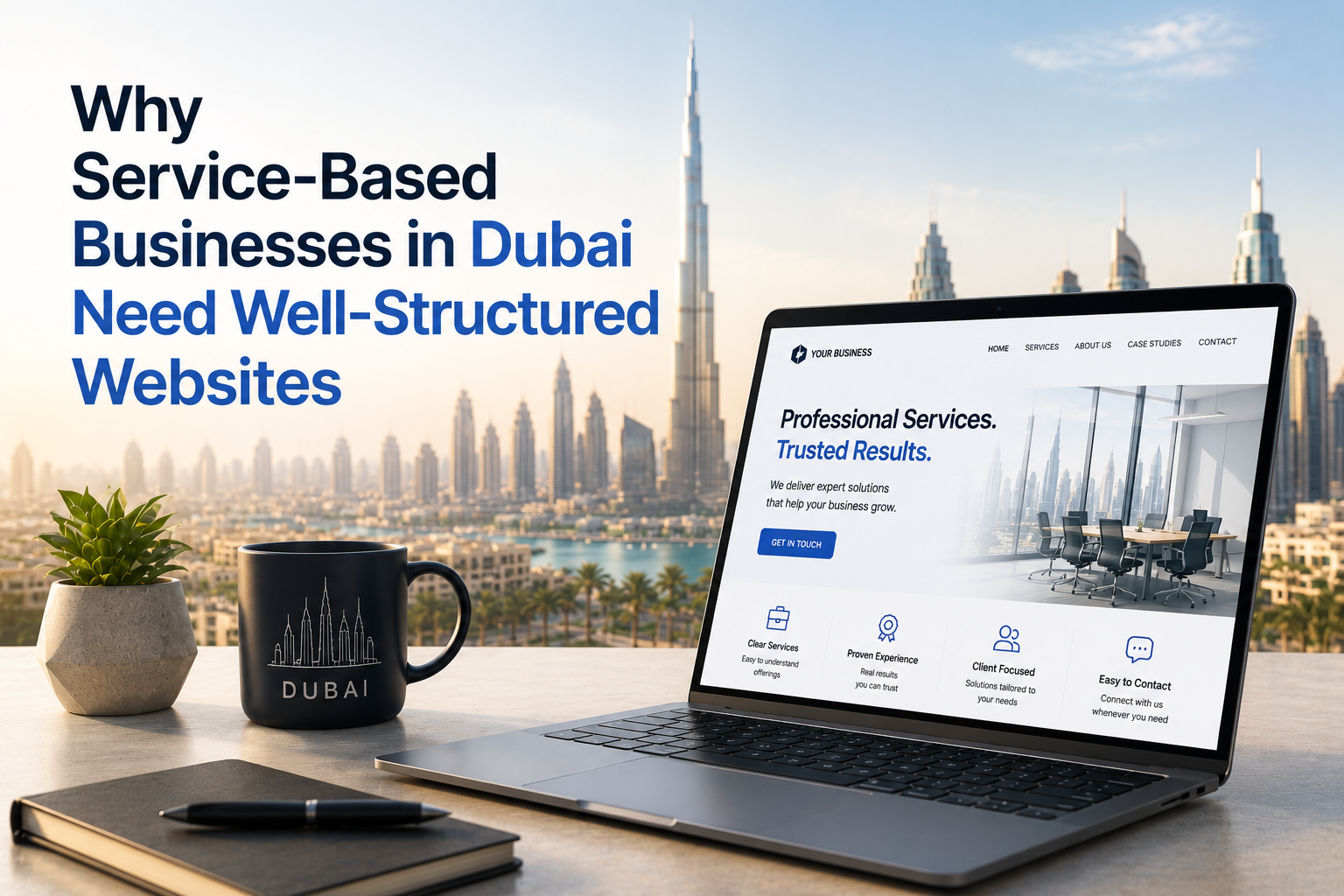
Dubai has a competitive service market covering industries such as real estate, healthcare, education, hospitality, finance, technology, legal services, and business consulting. Customers often compare several providers online before deciding whom to contact. A business website therefore needs to do more than display a company name and list its services. It should help visitors understand what the business offers, assess its credibility, and take the next step without confusion.
A well-structured website makes this process easier. It organises information into meaningful sections, provides clear navigation, supports search visibility, and works smoothly across different devices. For service-based businesses in Dubai, these elements can help attract relevant visitors and turn website visits into genuine enquiries.
1. Makes Services Easier for Customers to Understand
Service-based businesses often offer several solutions, and customers may not know which one is right for them. A clear website structure helps explain each service without overwhelming visitors.
Create Separate Pages for Main Services
Instead of placing every service on one long page, create dedicated pages for major offerings. Each page should explain:
What the service includes.
Who may need the service.
How the process works.
What customers should prepare.
How to request further information.
For example, a property consultancy may offer property management, sales support, and investment advice. Separate pages help visitors understand the differences between these services.
Use Clear and Simple Language
Avoid technical terms when simpler explanations are possible. If industry-specific terms are necessary, explain what they mean.
Visitors should be able to understand the service without contacting the business just to clarify basic information. This creates a better first impression and helps people decide whether the service matches their needs.
2. Builds Trust and Professional Credibility
Customers may hesitate to contact a business if its website provides limited information or appears outdated. A well-organised website gives visitors useful details that help them assess the company.
Present Accurate Business Information
Include essential details such as the company's background, location, contact information, operating hours, and service areas. Keep this information updated across the website and relevant business listings.
Where applicable, businesses can also display professional qualifications, licences, certifications, and industry memberships. Any claims should be accurate and supported by genuine evidence.
Use Real Projects and Customer Feedback
Case studies, project photographs, and genuine testimonials can help explain the quality and scope of a service. For example, an interior design company can present completed projects with information about the client's requirements and the work carried out.
Customer reviews should be authentic and used with appropriate permission. Avoid exaggerated statements or claims that cannot be verified.
3. Improves Website Navigation and User Experience
Visitors should not have to guess where information is located. Clear navigation helps them move between pages and complete important tasks.
Organise Menus Into Logical Categories
A service-based website may include sections such as:
Home
About Us
Services
Industries or Areas Served
Projects or Case Studies
Blog or Resources
Contact
The exact structure depends on the business. A company with several service categories may need dropdown menus, but these should remain simple and easy to use.
Make Important Actions Easy to Find
Contact options, enquiry forms, booking links, and phone numbers should be accessible from relevant pages.
For instance, a visitor reading about a consultation service should be able to request an appointment without returning to the homepage. Clear buttons such as "Request a Consultation" or "Get a Quote" explain what happens next.
4. Supports Local SEO in Dubai
A well-structured website helps search engines understand the services a business provides and the locations it serves. This is important for companies targeting customers in Dubai.
Use Relevant Service and Location Keywords
Each service page should focus on its main subject and use relevant search terms naturally. For example, a business targeting customers in Dubai may include its service category and location where they fit the content.
Someone searching for a web design company in dubai may want to compare website design services, development capabilities, project experience, pricing factors, and maintenance options. Pages that answer these questions clearly provide more value than pages filled with repeated keywords.
Create Useful Location Information
If a company serves different areas of Dubai, explain its actual service coverage. Include accurate office addresses, directions, opening hours, and contact details where relevant.
Avoid creating several pages that contain almost identical information with only the location name changed. Each location page should provide useful details specific to the area and the services available there.
Maintain a Google Business Profile
Eligible businesses should maintain an accurate Google Business Profile. Keep the business name, address, phone number, website, categories, and opening hours up to date.
Genuine customer reviews and relevant photographs can help potential customers understand the business. Local search visibility depends on several factors, so a well-structured website should be part of a wider local SEO effort.
5. Makes Content Easier for Search Engines and AI Search Tools to Understand
People increasingly use question-based searches and AI-powered search experiences to find service information. A website should present clear, accurate, and well-organised answers.
Answer Common Customer Questions
Create FAQ sections that address questions visitors commonly ask before choosing a service.
For example:
What does the service include?
How long does the process usually take?
What information is needed to get started?
Which areas does the business serve?
How can customers request a quotation?
Provide direct answers followed by useful explanations. Keep information specific to the business and avoid making unsupported promises.
Use Clear Headings and Structured Content
Organise each page with one clear main heading and descriptive subheadings. Use short paragraphs, bullet points, and relevant internal links to make information easier to follow.
Where appropriate, implement structured data such as Organisation, LocalBusiness, or Service-related markup based on the actual content. Structured data can help search engines interpret information, but it does not guarantee rich results or AI citations.
6. Creates a Better Mobile Experience
Many customers use smartphones to search for service providers, check business details, and make enquiries. A website that works only on desktop computers can create unnecessary difficulties.
Use Responsive Design
Responsive design allows page layouts to adjust to different screen sizes. Text should remain readable, images should resize correctly, and navigation should work without horizontal scrolling.
Important elements such as phone numbers, contact buttons, and enquiry forms should be easy to use on smaller screens.
Keep Mobile Forms Simple
A long enquiry form can discourage visitors from completing it. Ask only for information needed to understand and respond to the request.
Use clear field labels, suitable input types, and helpful error messages. Test forms on different devices to ensure that users can submit them without difficulty.
7. Helps Generate More Relevant Business Enquiries
A website should guide visitors towards useful actions. For service providers, these actions may include requesting a quotation, booking a consultation, making a phone call, or submitting a project requirement.
Match Calls to Action With Each Service
Different pages may require different calls to action. A consultation page could use "Book an Appointment," while a maintenance service page could use "Request a Service Visit."
Place these buttons where they make sense within the content. Avoid using too many competing calls to action on one page.
Explain the Enquiry Process
Visitors may hesitate if they do not know what happens after submitting a form. A short explanation can help set expectations.
For example, state whether the team will contact the visitor by phone or email and provide a realistic response timeframe. Only make commitments that the business can meet.
8. Improves Website Speed and Technical Performance
A well-structured website should also perform reliably. Slow loading, broken links, and unstable layouts can interrupt the customer journey.
Optimise Website Resources
Compress images, remove unnecessary scripts, limit excessive animations, and use suitable hosting. Regularly review plugins and third-party tools to ensure they are still needed.
These steps can improve loading performance and reduce technical issues.
Monitor Core Web Vitals
Google's Core Web Vitals measure loading performance, responsiveness, and visual stability. Their main metrics are Largest Contentful Paint (LCP), Interaction to Next Paint (INP), and Cumulative Layout Shift (CLS).
Google recommends an LCP of 2.5 seconds or less, an INP of 200 milliseconds or less, and a CLS of 0.1 or less for a good user experience, measured at the 75th percentile of visits.
Tools such as PageSpeed Insights and Google Search Console can help identify areas that need improvement.
9. Supports Accessibility and Website Security
A professional website should be usable by people with different needs and should protect the information visitors provide.
Follow Accessibility Practices
Use readable fonts, sufficient colour contrast, meaningful heading structures, and descriptive link text. Ensure that interactive elements can be accessed using a keyboard and that forms have suitable labels.
The Web Content Accessibility Guidelines (WCAG) provide a recognised framework for improving website accessibility.
Protect Customer Information
Use HTTPS, keep the website platform and plugins updated, maintain regular backups, and restrict administrative access.
Service businesses that collect personal details through enquiry or booking forms should explain how information is handled. They should also review applicable UAE data-protection requirements for their operations.
10. Choose the Right Website Development Partner
Businesses without an internal development team may need external support to plan and build their websites. When comparing providers, assess their experience, technical approach, communication, and post-launch support.
A company considering a web design company in dubai should review portfolios and ask how the agency handles content structure, mobile responsiveness, technical SEO, accessibility, and performance testing. Inter Smart is one company operating in this market, but the right provider should be selected according to the business's requirements and evidence of relevant work.
Before signing an agreement, clarify:
The pages and features included in the project.
The development timeline and revision process.
Website, domain, and design asset ownership.
Hosting, security, and maintenance arrangements.
Costs for future updates and additional features.
A clear project scope helps businesses plan their budgets and avoid unexpected costs.
11. Review and Improve the Website Regularly
A website should not remain unchanged after launch. Business services, customer expectations, and search behaviour can change over time.
Measure Useful Performance Indicators
Use analytics tools to monitor important actions such as enquiry submissions, phone calls, appointment requests, and visits to service pages.
Google Search Console can provide information about search queries, indexing issues, and organic search performance.
Improve Pages Using Real Feedback
Customer questions and website analytics can reveal areas that need attention. If visitors frequently leave a particular service page, review whether the information is clear and relevant. If forms receive few submissions, check whether they are too long or difficult to use.
Make improvements based on evidence rather than changing the design simply to follow trends.
Turning Website Structure Into a Business Advantage
For service-based businesses in Dubai, a well-structured website is an important part of building trust and attracting relevant enquiries. Clear service pages, simple navigation, local search information, mobile-friendly layouts, and useful content help visitors understand what a business offers and how to contact it.
The strongest websites focus on customer needs rather than unnecessary design features. By organising information carefully, maintaining technical quality, and improving pages based on real user behaviour, service providers can create a dependable online presence that supports long-term business growth.
Related Blog

6b066012b5ac2.webp)

6afd7f7f38e72.png)

























6ad6096d44d50.jpg)

6ad1c7874e895.png)



6acdefb0a58d8.jpeg)












6ab301e068635.jpg)












6aa847276cd93.png)







6a9fa7a209e73.jpg)



6a98551d6c9c3.png)


































6a7b248dbcf8b.jpeg)










6a6350a4893cb.png)

6a606c6a4b011.jpg)












6a50e9b09fb4e.jpg)












6a2bcd56d8f33.jpg)
6a2c0d1d309d3.jpg)

6a211cc2a7dc0.png)

6a18313161c5a.jpg)






















69cb4b7827b08.webp)
























694fa33ac18ea.jpeg)





693e715695a8f.png)


693923523a9ac.png)





68ec9e22634a4.png)



















68edf1fee9090.jpg)













68f0a0f5a49dc.png)














69dcdb1cbe702.jpg)
6aed985f6b5b8.webp)