
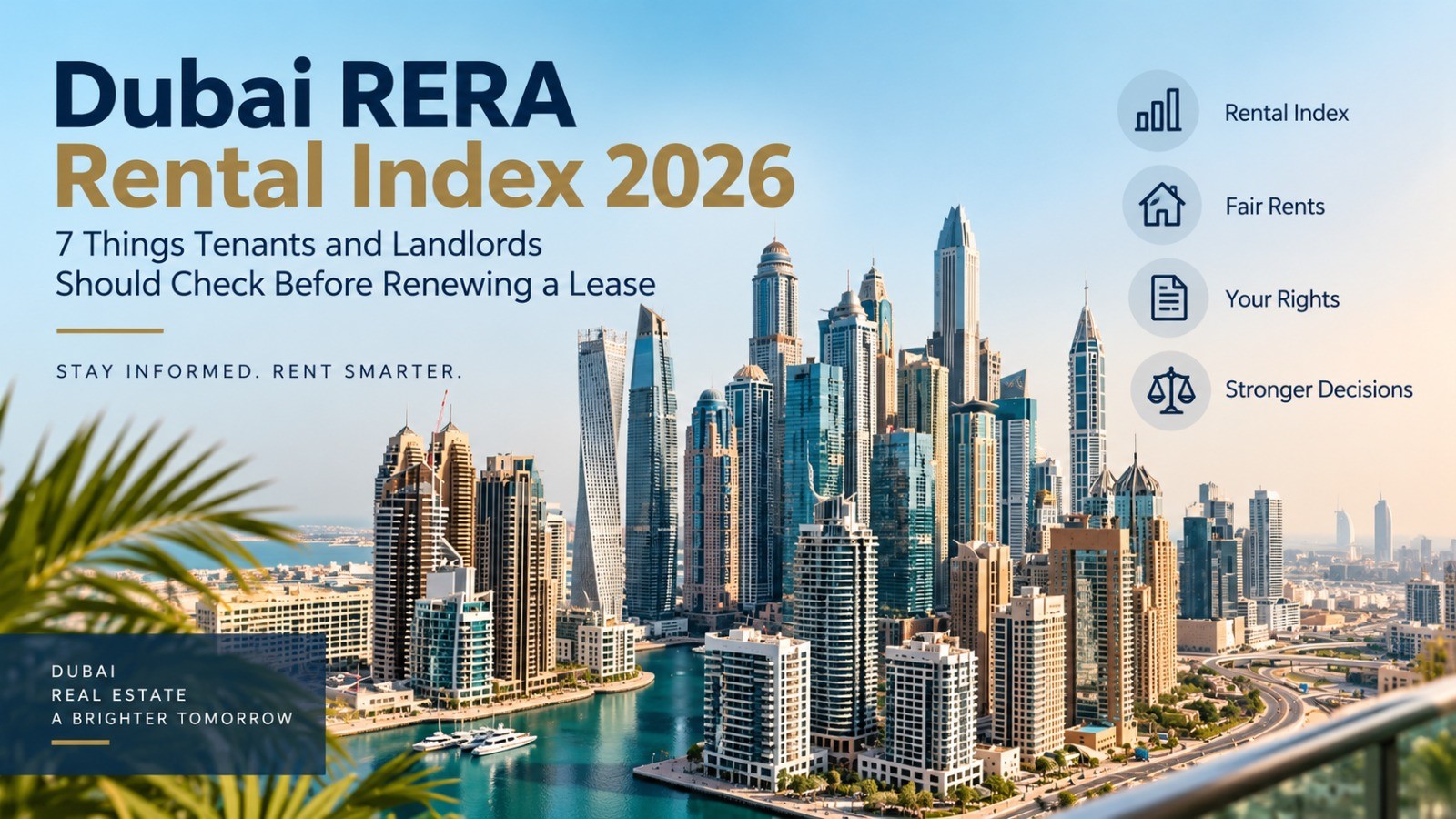
Dubai RERA Rental Index 2026: 7 Things Tenants and Landlords Should Check Before Renewing a Lease
Renewing a rental contract in Dubai can bring up plenty of
questions, especially when the landlord proposes a different rent. For both
tenants and landlords, the Dubai RERA Rental Index is a useful reference
for understanding rental values and checking whether a proposed increase falls
within the applicable rules.
Before agreeing to a renewal, it helps to look at more than
just the new rental amount. Here are seven things both parties should check.
1. Check the Official Dubai RERA Rental Index
Start by checking the relevant rental information through
the official Dubai Land Department rental services. The RERA Rental Index
Dubai provides a useful benchmark for understanding rental values for
eligible residential properties.
You may need to provide details about the property and
tenancy to get the relevant rental information. Checking this before a renewal
gives both sides a clearer starting point for the discussion.
2. Compare Your Current Rent With the Rental Benchmark
A common mistake is to assume that a rise in market asking
prices automatically means the same increase can be applied to an existing
tenancy.
Tenants should compare their current annual rent with the
applicable rental benchmark. Landlords should do the same before proposing a
new rental amount.
This gives both parties a more objective basis for
discussing the renewal rather than relying only on advertised prices or
estimates.
3. Check the Permitted Rent Increase
Dubai's rental regulations set limits on rent increases
based on the difference between the existing rent and the applicable rental
value.
Under the relevant framework, the maximum increase can range
from 0% to 20%, depending on how much the current rent differs from the
applicable rental benchmark.
That's why checking the RERA Rental Index before accepting a
proposed increase can be helpful. It allows both the tenant and landlord to
understand whether the proposed amount needs further discussion.
4. Check the 90-Day Notice Requirement
The timing of a rent increase also matters during a tenancy
renewal.
Where a party wants to change the rental terms, the
applicable notice requirements should be followed. In general, a proposed
change to the rental value should be communicated at least 90 days before
the contract expires, unless the parties agree otherwise.
For tenants, this means it is better to review a proposed
increase well before the final days of the tenancy. Waiting until the last
minute can make negotiations unnecessarily difficult.
5. Review Your Tenancy Contract and Ejari
The rental index isn't the only thing you should check. Take
some time to review the existing tenancy contract and relevant Ejari details as
well.
Look at the current rent, contract expiry date, property
information and any terms that relate to renewal. Having these documents
readily available can make it easier to clarify questions with the other party.
6. Keep Records of the Renewal Discussion
Keeping written records can save a lot of confusion later.
Tenants and landlords should keep copies of important
documents and communications, including:
- Rent-increase
notices
- Emails
and messages
- Current
and previous tenancy contracts
- Rental-index
results
- Other
relevant property documents
These records can help show what was proposed, when it was
communicated and how the other party responded.
7. Know What to Do If You Disagree
Not every landlord and tenant will agree on the proposed
rent. If a disagreement occurs, the first step should be to review the relevant
rental information and discuss the issue clearly.
If the matter cannot be resolved through communication, the
parties may need to consider the appropriate dispute-resolution process in
Dubai. For more complicated tenancy or property disputes, seeking professional
legal guidance can help parties understand their rights and available options.
You can also explore our guide to the Top 10 Lawyers in Dubai when
looking for legal professionals who handle different types of legal matters.
RERA Rental Index vs. Current Market Listings
It's easy to confuse the official rental index with rental
listings found online, but they serve different purposes.
Online property listings generally show asking prices for
properties being advertised, while the official rental index provides rental
information for its intended regulatory purpose. Because of this, tenants and
landlords shouldn't rely only on advertised prices when assessing a potential
rent increase.
Looking at the official rental information along with the
property's relevant details can give both sides a better basis for renewal
discussions.
A Simple Pre-Renewal Checklist
Before renewing a Dubai tenancy contract, ask yourself:
- Have
I checked the current RERA Rental Index?
Have
I compared it with my existing rent?
Is
the proposed increase within the applicable limit?
Was
the required notice provided on time?
Have
I reviewed my tenancy contract and Ejari details?
Have
I kept records of the renewal discussion?
Do I
know what options are available if we cannot reach an agreement?
Conclusion
The Dubai RERA Rental Index 2026 can be a useful
starting point for tenants and landlords preparing to renew a lease. Checking
the official rental information, understanding the applicable rent-increase
rules and keeping proper records can make the renewal process much clearer.
If a disagreement does arise, having the relevant documents
and rental information available can make it easier to understand the situation
and decide what to do next.
Since rental regulations and official services can change,
tenants and landlords should always check the latest requirements through the
relevant Dubai authorities before making decisions about a tenancy renewal.
Related Blog

6ab301e068635.jpg)











6aa847276cd93.png)









6a9fa7a209e73.jpg)




6a98551d6c9c3.png)










































6a7b248dbcf8b.jpeg)











6a6350a4893cb.png)

6a606c6a4b011.jpg)












6a50e9b09fb4e.jpg)















6a2bcd56d8f33.jpg)
6a2c0d1d309d3.jpg)

6a211cc2a7dc0.png)

6a18313161c5a.jpg)


























69cb4b7827b08.webp)















68ec9e22634a4.png)




























68edf1fee9090.jpg)
















68f0a0f5a49dc.png)























69dcdb1cbe702.jpg)