
Air Freight vs. Ocean Freight in 2026: How Shippers Should Choose the Right Mode
Introduction
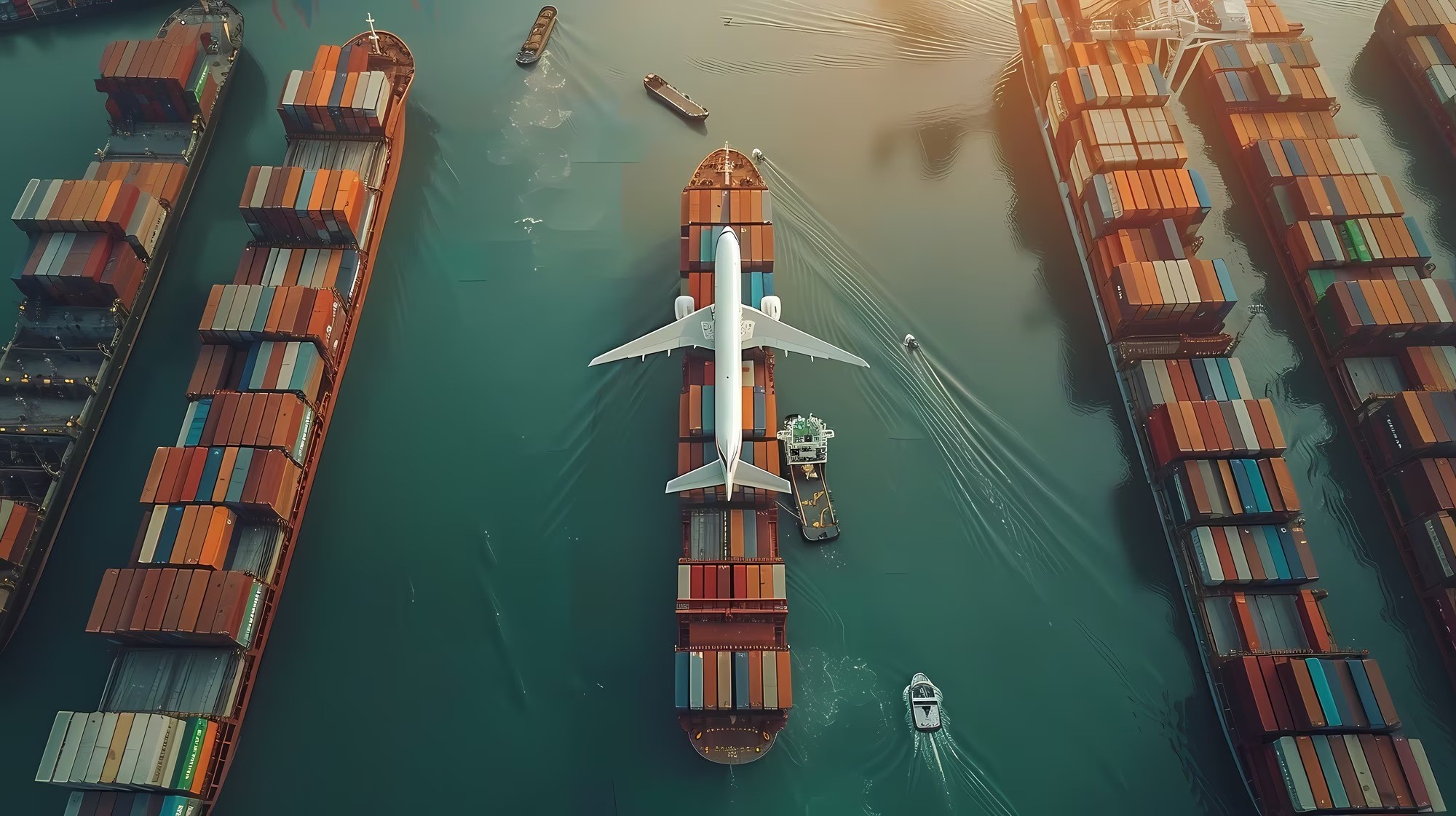
The choice between air freight and ocean freight is one of the most consequential decisions a shipper can make, and it's rarely as simple as 'what's cheaper.' The right answer depends on your product, your timeline, your trade lane, and your tolerance for risk.
In 2026, several factors have added nuance to this decision: ocean freight markets have seen notable volatility following geopolitical events; air cargo capacity has expanded on certain trade lanes; and fuel surcharges on both modes have fluctuated significantly. This means the standard rules of thumb, 'ocean is cheap, air is fast', still apply, but the gap between the two has narrowed or widened depending on the corridor.
The Fundamental Differences
Speed: Air freight transit times are measured in days (typically two to seven days for major trade lanes). Ocean freight is measured in weeks, ranging from two to three weeks for short-haul routes to five to six weeks for long transoceanic lanes like Asia-Europe or Asia-North America.
Cost: Ocean freight is significantly cheaper on a cost-per-kilogram basis for most cargo types, often by a factor of four to eight times, depending on the trade lane and commodity. This advantage narrows for very heavy, dense cargo where dimensional weight calculations are less punishing.
Reliability: Ocean freight is more susceptible to port congestion, weather delays, and geopolitical rerouting. Air freight offers more predictable transit times but is not immune to disruption, airport capacity constraints and flight cancellations do occur.
Volume capacity: Ocean freight accommodates virtually any volume, full container loads (FCL) of 20 or 40 feet, or less-than-container-load (LCL) consolidations for smaller shipments. Air cargo has tighter volume and weight constraints.
When Air Freight Is the Right Choice?
Air freight earns its premium pricing in specific scenarios:
Time-critical shipments: If a customer needs goods within a week and the order was placed yesterday, air freight is often the only viable option.
High-value, low-volume cargo: Electronics, pharmaceuticals, jewelry, and aerospace components have high value-to-weight ratios that make air freight costs proportionally more manageable.
Perishables and temperature-sensitive cargo: Fresh produce, cut flowers, and certain pharmaceutical products require fast transit to maintain product integrity.
Emergency stock replenishment: When an unexpected stockout creates urgent demand, air freight can bridge the gap while a larger ocean shipment is en-route.
When Ocean Freight Wins?
For the majority of global trade by volume, ocean freight remains the backbone mode for good reason:
Bulk and heavy cargo: Raw materials, industrial equipment, furniture, and vehicles are simply not economical via air, the weight and volume make ocean freight the only sensible option.
Non-urgent replenishment: Businesses that plan their inventory cycles with adequate lead time can absorb four-to-six-week transit times and benefit from dramatically lower freight costs.
Large retail orders: Consumer goods ordered in full container quantities are almost universally moved by sea.
For businesses based in the region working with shipping companies in UAE the choice often comes down to lead time planning. Companies that build longer planning horizons into their procurement can consistently choose ocean freight and realize significant cost savings over the course of the year.
Top 3 Hybrid Strategies
Many sophisticated shippers don't choose one mode exclusively. Instead, they use a hybrid approach:
Baseline inventory replenishment by ocean, with air freight reserved for fast-selling SKUs or emergency top-ups
A 'first-in, first-out' air shipment to launch a new product, followed by ocean freight for ongoing supply
Air for high-margin products, ocean for commodity lines, even within the same business
Work With Al Sharqi Co LLC for Smarter Freight Decisions
Choosing between air and ocean freight becomes easier with the right logistics partner. Al Sharqi Co LLC supports businesses with reliable freight forwarding, customs clearance, warehousing solutions, transportation, and end-to-end supply chain solutions across the UAE, GCC, and global markets. Whether you need urgent air freight for time-sensitive cargo or cost-effective ocean freight for larger shipments, Al Sharqi helps you plan the right shipping strategy based on your timelines, cargo type, budget, and trade lane requirements.
Conclusion
The air versus ocean decision is not a permanent choice, it's a dynamic one that should be revisited as trade lane conditions, freight rates, and product strategies evolve. In 2026, the smart approach is to maintain optionality: work with freight partners who have capability in both modes, and make decisions based on data rather than habit.
FAQs
Q1: Is it possible to split a single shipment between air and ocean?
Yes, but it requires coordination. Some businesses air-freight the initial portion of an order to meet an urgent deadline, while the bulk of the order follows by ocean freight. This approach works well for new product launches.
Q2: How do I calculate whether air freight is worth the premium?
Compare the air freight premium against the business cost of the delay: potential lost sales, stockout penalties, expediting costs at the destination. If the cost of delay exceeds the air freight premium, air is justified.
Q3: Are there cargo types that cannot go via air freight?
Yes. Dangerous goods classifications, oversized cargo, and certain hazardous materials face restrictions or outright prohibitions on commercial aircraft. Always verify with your freight forwarder before planning an air shipment.
Related Blog

6ab301e068635.jpg)












6aa847276cd93.png)








6a9fa7a209e73.jpg)





6a98551d6c9c3.png)






































6a7b248dbcf8b.jpeg)












6a6350a4893cb.png)

6a606c6a4b011.jpg)












6a50e9b09fb4e.jpg)
















6a2bcd56d8f33.jpg)
6a2c0d1d309d3.jpg)
6a211cc2a7dc0.png)

6a18313161c5a.jpg)


























69cb4b7827b08.webp)















68ec9e22634a4.png)

























68edf1fee9090.jpg)















68f0a0f5a49dc.png)























69dcdb1cbe702.jpg)