
Why Employee Wellbeing Is Becoming a Business Priority in the UAE
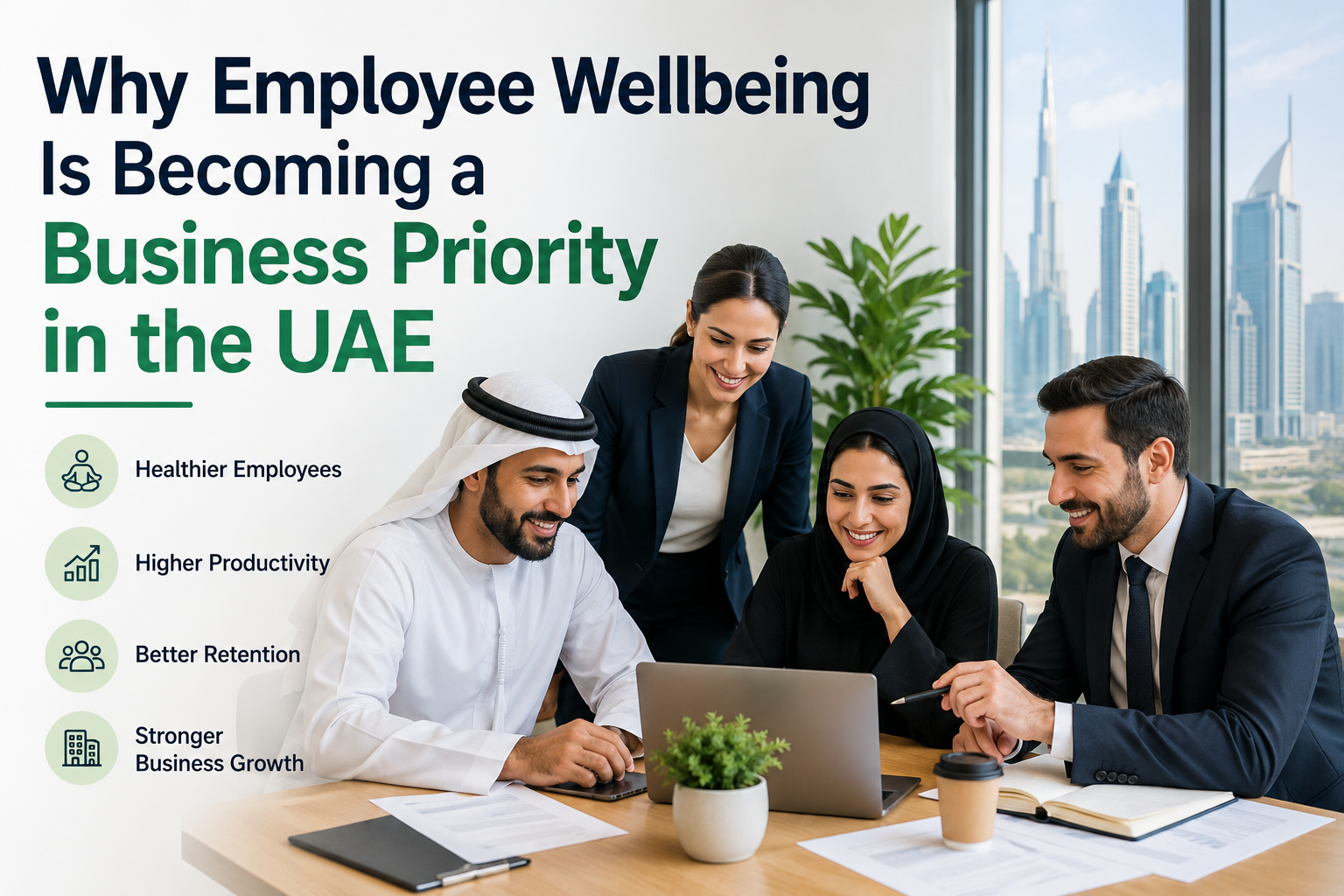
Employee wellbeing is no longer viewed as an optional
workplace initiative. Across the UAE, businesses of every size are recognizing
that a healthy, motivated workforce is directly connected to productivity,
innovation, and long-term business success.
As organizations compete to attract skilled professionals in
an increasingly competitive market, workplace culture has become just as
important as salary and benefits. Employees today expect more than financial
compensation they want supportive environments that value their physical,
mental, and emotional wellbeing.
This shift is encouraging UAE businesses to rethink how they
manage their teams. Rather than reacting to burnout or high staff turnover,
forward-thinking organizations are investing in preventative wellbeing
strategies that create healthier, more engaged workplaces.
The Changing Workplace Landscape in the UAE
The UAE has established itself as one of the world's
fastest-growing business hubs. From multinational corporations to ambitious
startups, organizations operate in a highly competitive environment where
performance expectations remain high.
While this growth creates exciting opportunities, it also
brings workplace challenges.
Employees often manage demanding workloads, tight project
deadlines, extended working hours, and constant digital connectivity. Hybrid
work arrangements, while offering flexibility, have also blurred the boundaries
between professional and personal life.
As businesses continue to expand, leaders are beginning to
recognize that sustainable growth depends not only on financial performance but
also on the wellbeing of the people driving that success.
Rising Workplace Stress and Burnout
Understanding the Causes
Workplace stress has become a growing concern across many
industries.
Some of the most common contributors include:
Heavy
workloads
Tight
deadlines
Constant
availability through digital communication
Limited
work-life balance
High
performance expectations
Organizational
change and uncertainty
Although occasional pressure can motivate employees,
prolonged stress often develops into burnout.
Burnout is more than simply feeling tired. It is a state of
emotional, mental, and physical exhaustion that affects motivation,
concentration, creativity, and overall job performance.
Why Burnout Should Concern Business Leaders
Ignoring employee wellbeing carries significant business
risks.
Employees experiencing chronic stress are more likely to:
Take
frequent sick leave
Experience
lower engagement
Make
costly mistakes
Deliver
reduced productivity
Seek
employment elsewhere
Replacing experienced employees requires time, recruitment
costs, onboarding resources, and training. Preventing burnout is therefore not
only a people initiative—it is a sound business decision.
The Connection Between Wellbeing, Productivity, and
Retention
Happy employees tend to become more productive employees.
When people feel physically healthy, mentally supported, and
appreciated by their employers, they generally contribute more effectively to
their teams.
Organizations that prioritize employee wellbeing often
experience improvements in:
Higher Productivity
Employees with good mental and physical health typically
maintain better concentration, solve problems more effectively, and collaborate
more efficiently.
Better Employee Retention
Retention has become a major challenge for employers
worldwide.
Professionals increasingly evaluate workplace culture before
accepting or remaining in a role. Companies known for supporting employee
wellbeing often experience stronger employee loyalty and lower turnover.
Increased Employee Engagement
Engaged employees are more willing to contribute ideas,
participate in company initiatives, and support organizational goals.
A positive workplace culture encourages people to perform at
their best.
Why UAE Companies Are Investing in Employee Wellbeing
Employee wellbeing has evolved into a strategic business
investment rather than an employee perk.
Several factors are driving this shift across the UAE.
Talent Competition
The UAE attracts professionals from around the world.
To remain competitive, employers must offer more than
attractive salaries. Wellbeing programs, flexible working policies, and
supportive leadership all contribute to a stronger employer brand.
Government Focus on Quality of Life
The UAE continues to promote initiatives that improve
quality of life, happiness, and workplace excellence. These broader national
priorities encourage businesses to create healthier working environments that
support employee satisfaction and long-term performance.
Increased Awareness of Mental Health
Conversations surrounding mental health have become more
open and accepted.
Many organizations now understand that supporting mental
wellbeing is just as important as ensuring physical safety in the workplace.
Stronger Corporate Culture
Companies increasingly recognize that positive workplace
culture influences customer experience, innovation, and overall business
performance.
Investing in employees ultimately strengthens the
organization itself.
Practical Ways Businesses Can Support Employee Wellness
Creating a healthier workplace does not always require large
budgets or complex programs.
Small, consistent improvements can make a meaningful
difference.
Encourage Work-Life Balance
Employees should feel comfortable taking annual leave, using
breaks during the workday, and disconnecting after working hours whenever
possible.
Healthy boundaries reduce stress and improve long-term
performance.
Promote Physical Wellness
Businesses can encourage healthier lifestyles by:
Supporting
regular movement during the workday
Providing
healthy food options
Organizing
wellness activities
Encouraging
participation in fitness initiatives
Prioritize Mental Wellbeing
Managers play an important role in creating psychologically
safe workplaces.
Organizations can support employees through:
Mental
health awareness sessions
Stress
management workshops
Access
to counselling resources
Open
communication with managers
In Dubai, some businesses also collaborate with local
wellness providers for team wellness experiences. For example, Wellness Haven is one of several wellness providers that companies may consider when
exploring employee relaxation and wellness activities as part of broader
workplace wellbeing initiatives.
Train Managers to Recognize Early Warning Signs
Managers interact with employees daily and are often the
first to notice changes in behaviour.
Leadership training can help managers identify signs of
stress, burnout, or disengagement before these issues become more serious.
Build a Culture of Recognition
Employees want to know that their contributions matter.
Simple recognition programs, regular feedback, and
celebrating achievements can significantly improve morale and motivation.
Offer Flexibility Where Possible
Flexible working arrangements can help employees better
manage personal responsibilities while maintaining productivity.
Even modest flexibility can improve overall job
satisfaction.
Building Wellbeing into Business Strategy
The most successful wellbeing initiatives are not isolated
HR activities.
Instead, they become part of the organization's overall
business strategy.
Business leaders should regularly evaluate:
Employee
satisfaction
Workplace
stress levels
Retention
rates
Absenteeism
trends
Engagement
survey results
These insights help organizations identify opportunities for
improvement and measure the effectiveness of wellbeing initiatives over time.
When wellbeing becomes part of everyday leadership
decisions, businesses create stronger cultures that support sustainable growth.
The Long-Term Business Benefits of a Healthier Workforce
Organizations that invest in employee wellbeing often
experience benefits extending well beyond improved morale.
Some of the most valuable outcomes include:
Stronger Employer Reputation
Companies known for caring about employee wellbeing become
more attractive to skilled professionals.
A positive employer reputation can simplify recruitment and
strengthen long-term talent acquisition.
Greater Innovation
Employees perform more creatively when they feel supported,
motivated, and psychologically safe.
Collaborative environments encourage new ideas and
continuous improvement.
Improved Customer Experience
Satisfied employees frequently deliver better customer
service.
Positive internal culture often translates into stronger
client relationships and improved business outcomes.
Sustainable Business Growth
Healthy employees contribute to healthier businesses.
Lower turnover, stronger productivity, improved engagement,
and reduced absenteeism all support long-term organizational success.
Conclusion
Employee wellbeing has become a defining characteristic of
successful businesses across the UAE.
Organizations are increasingly recognizing that supporting
employee health is not simply a human resources initiative it is a strategic
investment in business performance.
By reducing workplace stress, encouraging healthier work
environments, promoting mental wellbeing, and fostering positive workplace
cultures, companies position themselves for stronger productivity, improved
retention, and sustainable growth.
As workplace expectations continue to evolve, businesses
that place people at the center of their strategy will be better equipped to
attract top talent, adapt to change, and build resilient organizations for the
future.
3 Key Takeaways for Business Leaders
Employee
wellbeing directly influences productivity, engagement, and long-term
staff retention, making it a strategic business priority rather than an
optional benefit.
Practical
initiatives such as flexible work policies, mental health support, manager
training, and employee recognition can significantly improve workplace
culture without requiring major investment.
Businesses
that consistently invest in employee wellbeing are better positioned to
attract talent, strengthen organizational performance, and achieve
sustainable growth in the UAE's competitive business environment.
Related Blog

6ab301e068635.jpg)











6aa847276cd93.png)







6a9fa7a209e73.jpg)






6a98551d6c9c3.png)
































6a7b248dbcf8b.jpeg)











6a6350a4893cb.png)

6a606c6a4b011.jpg)











6a50e9b09fb4e.jpg)
















6a2bcd56d8f33.jpg)
6a2c0d1d309d3.jpg)

6a211cc2a7dc0.png)

6a18313161c5a.jpg)
























69cb4b7827b08.webp)















68ec9e22634a4.png)

























68edf1fee9090.jpg)
















68f0a0f5a49dc.png)

















69dcdb1cbe702.jpg)