How to Start Investing for Retirement in UAE at Any Age?
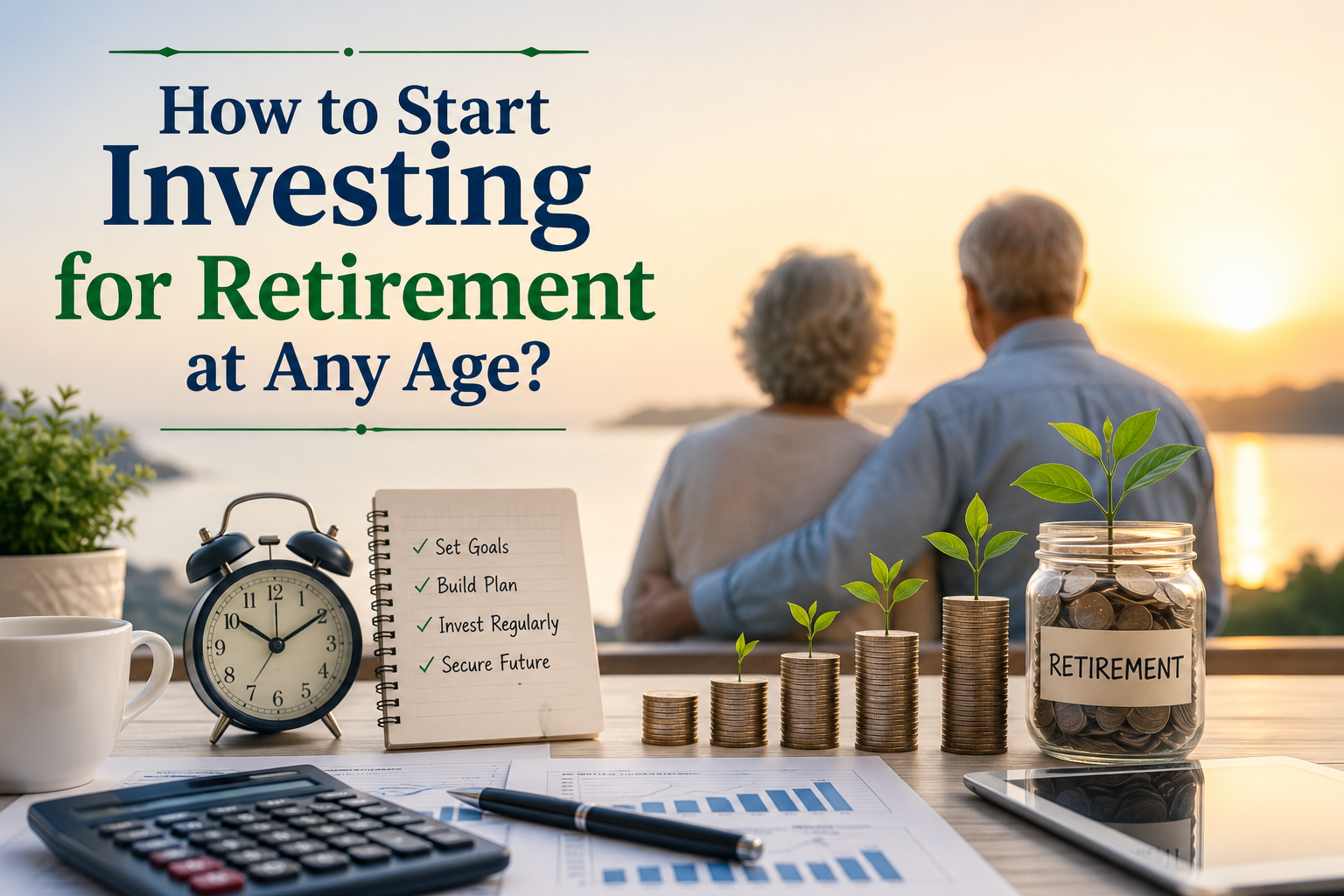
Retirement can feel like a distant milestone when you're in your twenties, an urgent priority in your forties, or a looming deadline in your fifties. Yet no matter where you are today, the most important step toward a secure retirement is simply to start. This is especially true in the UAE, where most expatriates cannot rely on a government pension after leaving the workforce. Many people delay investing because they assume they've missed the ideal window or don't know where to begin. The truth is, retirement investment plans in UAE can be tailored to any age, nationality, or income level, and even small, consistent contributions can compound into significant wealth over time.
How to Start Investing for Retirement in UAE at Any Age?
This guide breaks down how to approach retirement investing at every stage of life as a resident of the UAE, so you can build a strategy that fits where you are right now.
Understand How Retirement Works Differently in the UAE
Before diving into strategy, it's worth understanding what makes retirement planning in the UAE unique. Unlike many Western countries, the UAE does not offer a national pension system for expatriates, who make up close to 90% of the population. Instead, private-sector employees typically receive an end-of-service gratuity, a lump sum based on years of service, which is rarely enough to fund a full retirement on its own. UAE and GCC nationals, on the other hand, contribute to schemes such as the General Pension and Social Security Authority (GPSSA). Given this gap, most residents need to take personal responsibility for building their own retirement portfolio, whether through employer-supported savings schemes like DIFC's DEWS plan, personal investment accounts, or real estate. Recognizing this early is the first step to building a realistic, self-directed retirement plan while living in the UAE.
Start With a Clear Picture of Your Retirement Goals
Once you understand the local context, the next step is defining what retirement actually looks like for you. Do you plan to retire in the UAE, return to your home country, or split your time between both? Your answer significantly affects your planning, since cost of living, healthcare access, and currency considerations vary widely between these scenarios. Estimating your future expenses, factoring in inflation, healthcare costs, and lifestyle preferences gives you a target number to work toward. This number becomes the foundation for deciding how much you need to save each month and which investment vehicles make sense for your timeline. Without a clear goal, it's easy to under-save or invest too conservatively, leaving you short when retirement finally arrives.
In Your 20s and 30s: Prioritize Growth and Consistency
If you're starting young while working in the UAE, time is your greatest asset. Even modest monthly contributions can grow substantially over several decades thanks to compound returns, and the UAE's tax-free income structure means more of what you earn can go directly toward investing rather than income tax. At this stage, it generally makes sense to lean toward growth-oriented investments such as equities, index funds, or diversified investment portfolios, since you have time to ride out short-term market volatility. The key habit to build now is consistency: automating contributions to an investment plan or savings scheme ensures you're building wealth steadily, without relying on willpower alone. Avoid the temptation to wait for a "better time" to start, since delaying even five years can mean sacrificing tens of thousands of dirhams in future compounded growth.
In Your 40s: Balance Growth With Increasing Stability
By your forties, retirement starts to feel more concrete, and it's a good time to reassess your strategy, particularly if you're an expatriate in the UAE without access to a home-country pension. You likely have a clearer sense of your income trajectory, family obligations, and lifestyle expectations, including whether you intend to stay in the UAE long term or eventually relocate. This is often the stage to increase contribution rates, especially if you started later or took a more cautious approach earlier. While growth investments still play an important role, it's wise to begin diversifying into a mix of asset classes, including bonds, UAE real estate, or income-generating investments, to reduce overall portfolio risk. Reviewing your retirement plan every year or two, and adjusting contributions as your income grows, helps ensure you stay on track toward your target.
In Your 50s and Beyond: Shift Toward Preservation and Income
As retirement approaches, protecting the wealth you've built becomes just as important as growing it. This doesn't mean abandoning growth investments entirely, since many retirees still need their portfolios to outpace inflation for two or three more decades, but it does mean gradually shifting toward more stable, income-generating assets. In the UAE context, this is also the time to factor in your end-of-service gratuity payout, review visa and residency options such as the Golden Visa for retirees or investors, and stress-test your retirement plan against different market and relocation scenarios. Working with a financial advisor familiar with the UAE market at this stage can be particularly valuable, as they can help fine-tune your withdrawal strategy and ensure your money lasts throughout retirement, wherever you choose to spend it.
Diversify Beyond a Single Investment Type
Regardless of your age, relying on a single asset class is risky. A well-rounded retirement portfolio typically includes a mix of equities, fixed income, real estate, and potentially alternative investments, spread across different sectors and geographies. Diversification helps cushion your portfolio against market downturns in any one area while still capturing growth opportunities elsewhere. For investors in the UAE, this might mean combining local real estate investments in Dubai or Abu Dhabi with global equity funds, fixed-income products, and structured retirement savings plans, creating a balanced approach that isn't overly dependent on any single market, currency, or asset type.
Take Advantage of Tax-Efficient and Employer-Sponsored Options
While the UAE doesn't have a traditional pension system for most residents, there are still structured options worth taking advantage of. Many companies operating in the DIFC are required to contribute to the DEWS (DIFC Employee Workplace Savings) plan on behalf of their employees, which functions similarly to an employer-sponsored retirement account. Outside the DIFC, some employers offer voluntary savings schemes or matching contributions as part of their benefits package, and capturing any available employer match should be a priority. Combined with the UAE's lack of personal income tax, structured investment plans and voluntary retirement savings vehicles can offer strong tax efficiency for residents building long-term wealth locally.
Don't Let a Late Start Discourage You
If you're starting your retirement investing journey later in life, whether you've recently moved to the UAE or simply delayed planning, it's natural to feel behind, but it's rarely too late to make meaningful progress. Late starters can compensate by increasing contribution rates, extending their working years slightly, or adjusting retirement expectations to align with a realistic savings timeline. The worst decision is not investing at all out of discouragement. Even a decade of focused, consistent investing while based in the UAE can significantly improve your retirement security compared to continuing to delay.
Final Thoughts
Investing for retirement in the UAE isn't about finding a single perfect strategy, it's about starting where you are, understanding the unique local landscape, and staying consistent over the long term. Whether you're just beginning your career in Dubai or Abu Dhabi, or approaching retirement after years of living and working in the Emirates, the right mix of growth, diversification, and disciplined saving can put you on a path toward financial security, no matter where you eventually choose to retire. Since everyone's income, residency status, and retirement goals differ, working with a knowledgeable partner can make a meaningful difference in building a plan that fits your unique circumstances. Leading investment groups in UAE offer expert guidance to help you design and manage a retirement investment strategy tailored to your age, goals, and financial situation, making it easier to invest with confidence at every stage of life in the UAE.
Note: This article is for informational purposes only and does not constitute financial advice. Consider speaking with a licensed financial advisor to discuss your individual retirement planning needs.
Related Blog



6acdefb0a58d8.jpeg)




















6ab301e068635.jpg)












6aa847276cd93.png)










6a9fa7a209e73.jpg)





6a98551d6c9c3.png)




























6a7b248dbcf8b.jpeg)










6a6350a4893cb.png)

6a606c6a4b011.jpg)











6a50e9b09fb4e.jpg)














6a2bcd56d8f33.jpg)
6a2c0d1d309d3.jpg)

6a211cc2a7dc0.png)

6a18313161c5a.jpg)

























69cb4b7827b08.webp)























694fa33ac18ea.jpeg)




693e715695a8f.png)


693923523a9ac.png)






68ec9e22634a4.png)























68edf1fee9090.jpg)














68f0a0f5a49dc.png)



















69dcdb1cbe702.jpg)