
Top 10 Key Benefits of Using CLM Software in Modern Businesses in UAE
Top 10 Key Benefits of Using CLM Software in Modern Businesses in UAE
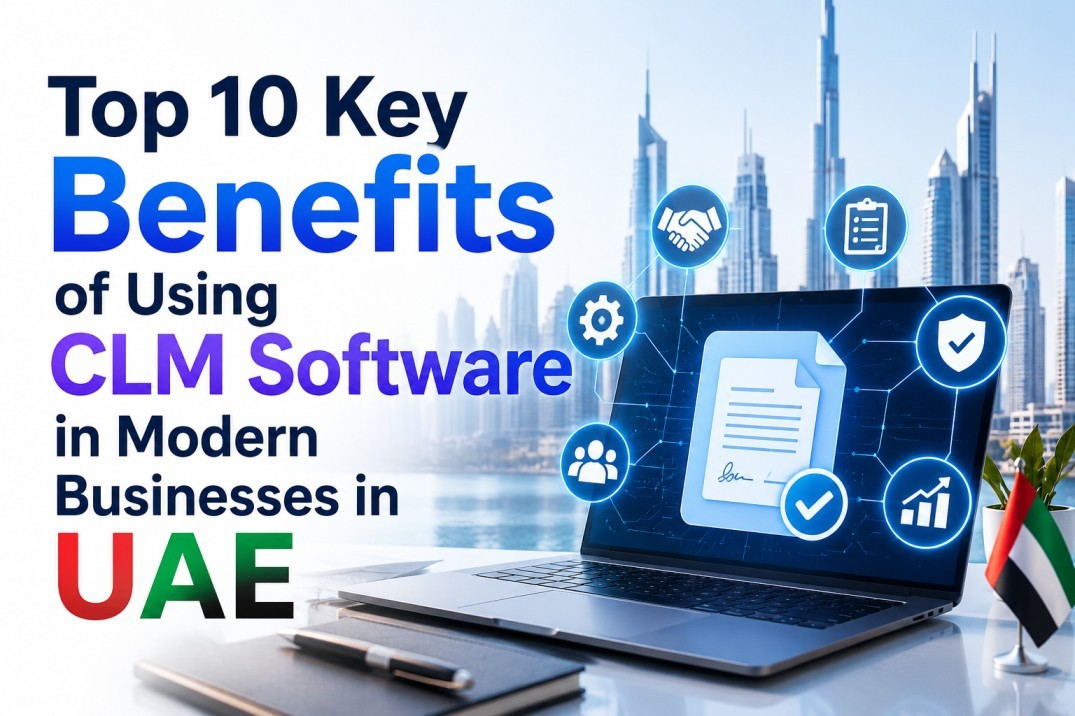
Contracts are at the heart of almost every modern business. From agreements with suppliers and customers to employment contracts, partnerships, leases, and service-level agreements, businesses in the UAE manage a large volume of contractual documents every day. As companies grow, managing these contracts manually can become time-consuming, difficult to monitor, and vulnerable to errors.
This is where Contract Lifecycle Management (CLM) software can make a significant difference. CLM solutions help businesses manage contracts throughout their entire lifecycle—from drafting and negotiation to approval, signing, renewal, and eventual termination. For businesses pursuing digital transformation, contract lifecycle software in UAE can provide a centralized and structured way to manage contractual processes.
The UAE is also actively encouraging digital transactions. Federal Decree-Law No. 46 of 2021 provides a legal framework for electronic transactions and trust services and supports the use of electronic documents and electronic signatures.
Here are the top 10 benefits of using CLM software in modern UAE businesses.
1. Centralized Contract Management
One of the biggest advantages of CLM software is that it brings contracts into a single centralized platform. Instead of keeping agreements across email inboxes, shared folders, computers, and physical files, employees can access relevant contracts from one organized system.
This makes it easier for legal, finance, procurement, sales, HR, and management teams to find the documents they need. Centralized storage also reduces the risk of losing important contracts or working with outdated versions.
For businesses managing contracts across multiple departments or locations, having one reliable source of contractual information can significantly improve organization and efficiency.
2. Faster Contract Creation and Approval
Traditional contract preparation often involves repetitive tasks, multiple emails, manual document editing, and lengthy approval processes. CLM software can streamline these activities through templates, automated workflows, predefined approval procedures, and standardized clauses.
For example, a sales team can use an approved contract template instead of creating a new document from scratch. The system can then automatically send the agreement to the appropriate legal or management team for review.
This reduces unnecessary delays and allows businesses to complete agreements faster, helping them start projects and commercial relationships sooner.
3. Better Visibility Into Contract Obligations
A signed contract is not the end of the process. Businesses must continue monitoring payment schedules, delivery requirements, service obligations, deadlines, performance conditions, and renewal dates.
CLM software provides greater visibility into these obligations. Important dates and responsibilities can be recorded and monitored through dashboards and automated notifications.
For UAE businesses handling numerous supplier, customer, or service agreements, this visibility can help employees stay aware of upcoming obligations rather than relying on spreadsheets or personal reminders.
4. Reduced Risk of Missed Renewals and Deadlines
Missing a contract renewal or termination deadline can create unnecessary costs and operational problems. Some agreements may automatically renew if appropriate notice is not provided within a specified period.
CLM software can track critical dates and send reminders before important deadlines. Teams can therefore review contracts in advance and decide whether an agreement should be renewed, renegotiated, amended, or terminated.
This proactive approach can reduce the possibility of unintentionally renewing unfavorable agreements or missing important contractual milestones.
5. Improved Compliance and Risk Management
Compliance is an important consideration for businesses operating in the UAE. Companies must manage contracts in accordance with applicable commercial, regulatory, data protection, industry-specific, and contractual requirements.
CLM software can help organizations establish standardized processes for contract creation, review, approval, and storage. Access controls can also restrict sensitive contracts to authorized employees.
The UAE's electronic transactions framework recognizes electronic documents and provides rules concerning electronic signatures, documents, trust services, and their validity.
However, businesses should ensure that their CLM platform and signing processes are configured to meet the specific legal and regulatory requirements applicable to their activities.
6. More Secure Contract Storage
Contracts frequently contain confidential business information, including pricing, employee information, customer details, commercial terms, intellectual property, and supplier information.
Keeping sensitive documents in uncontrolled locations can increase security risks. CLM platforms can provide controlled access, user permissions, audit trails, and centralized document management.
Instead of allowing every employee to access every contract, organizations can establish role-based permissions. For example, a finance employee may have access to payment-related agreements while sensitive employment or legal documents remain restricted.
This approach provides greater control over who can view, edit, approve, or download contractual information.
7. Easier Collaboration Between Departments
Contract management often involves several teams. A single agreement may require input from sales, procurement, finance, legal, operations, and senior management.
Email-based collaboration can make it difficult to determine which version is current and who is responsible for the next step.
CLM software creates structured workflows that allow different departments to collaborate within the same system. Employees can review documents, provide comments, complete assigned tasks, and approve contracts according to predefined procedures.
This improves communication and reduces the confusion associated with long email chains and multiple document versions.
8. Reduced Administrative Costs
Manual contract management requires considerable employee time. Staff may spend hours searching for documents, entering information into spreadsheets, preparing reminders, tracking approvals, and checking renewal dates.
Automation can reduce many of these repetitive activities.
Although implementing CLM software requires an initial investment, businesses may achieve long-term savings through reduced administrative work, fewer manual errors, improved contract visibility, and faster processes.
For growing UAE companies, this can allow employees to spend more time on strategic activities instead of routine contract administration.
9. Better Contract Performance and Financial Control
Contracts directly influence a company's revenue and expenses. Poor contract monitoring can result in missed discounts, incorrect payments, unclaimed obligations, or unfavorable renewals.
CLM software can help finance and management teams monitor important commercial terms and contractual commitments.
For example, businesses can track payment conditions, pricing structures, renewal terms, service commitments, and other financial obligations. This can help organizations identify opportunities for cost savings and ensure that contractual terms are being followed.
Better visibility also enables management to make more informed decisions when negotiating future agreements.
10. Improved Business Intelligence and Decision-Making
Modern CLM platforms can turn contract information into useful business insights. Instead of simply storing documents, organizations can analyze contract data through dashboards and reports.
Management may be able to identify contracts approaching expiration, suppliers with multiple agreements, frequently used clauses, approval bottlenecks, or contracts requiring attention.
These insights can help businesses identify risks and improve their contracting strategies.
For example, if a company discovers that several important supplier contracts expire within the same quarter, it can begin negotiations earlier and avoid last-minute decisions.
Why CLM Is Becoming More Relevant for UAE Businesses
The shift toward digital business operations makes automated contract management increasingly relevant in the UAE. The country's regulatory framework supports electronic transactions and digital signatures, while government initiatives continue to promote digital transformation and paperless processes.
For businesses operating in sectors such as real estate, construction, logistics, technology, professional services, healthcare, finance, and retail, contracts can represent a substantial part of daily operations. Managing these agreements efficiently can therefore have a direct impact on productivity, compliance, risk, and profitability.
However, selecting CLM software should not be based solely on the number of features. Businesses should consider factors such as ease of use, security, integration capabilities, workflow customization, reporting, electronic signature support, scalability, and compatibility with their existing business systems.
Conclusion
Contract Lifecycle Management software can transform the way modern businesses in the UAE create, manage, monitor, and renew agreements. From centralized document storage and automated approvals to improved compliance, security, collaboration, and financial control, CLM can address many of the challenges associated with traditional contract management.
As UAE businesses continue adopting digital processes, effective contract management is becoming more than an administrative requirement—it is an important part of operational efficiency and risk management.
For organizations managing a growing number of contracts, investing in a suitable CLM solution can provide the structure, visibility, and automation needed to manage agreements more efficiently throughout their entire lifecycle.
Related Blog



6ab301e068635.jpg)















6aa847276cd93.png)










6a9fa7a209e73.jpg)






6a98551d6c9c3.png)
































6a7b248dbcf8b.jpeg)










6a6350a4893cb.png)

6a606c6a4b011.jpg)












6a50e9b09fb4e.jpg)

















6a2bcd56d8f33.jpg)
6a2c0d1d309d3.jpg)

6a211cc2a7dc0.png)

6a18313161c5a.jpg)

























69cb4b7827b08.webp)















68ec9e22634a4.png)



























68edf1fee9090.jpg)

















68f0a0f5a49dc.png)





















69dcdb1cbe702.jpg)