
Healthy Snacking: Why Nuts and Seeds Should Be Part of Your Daily Diet
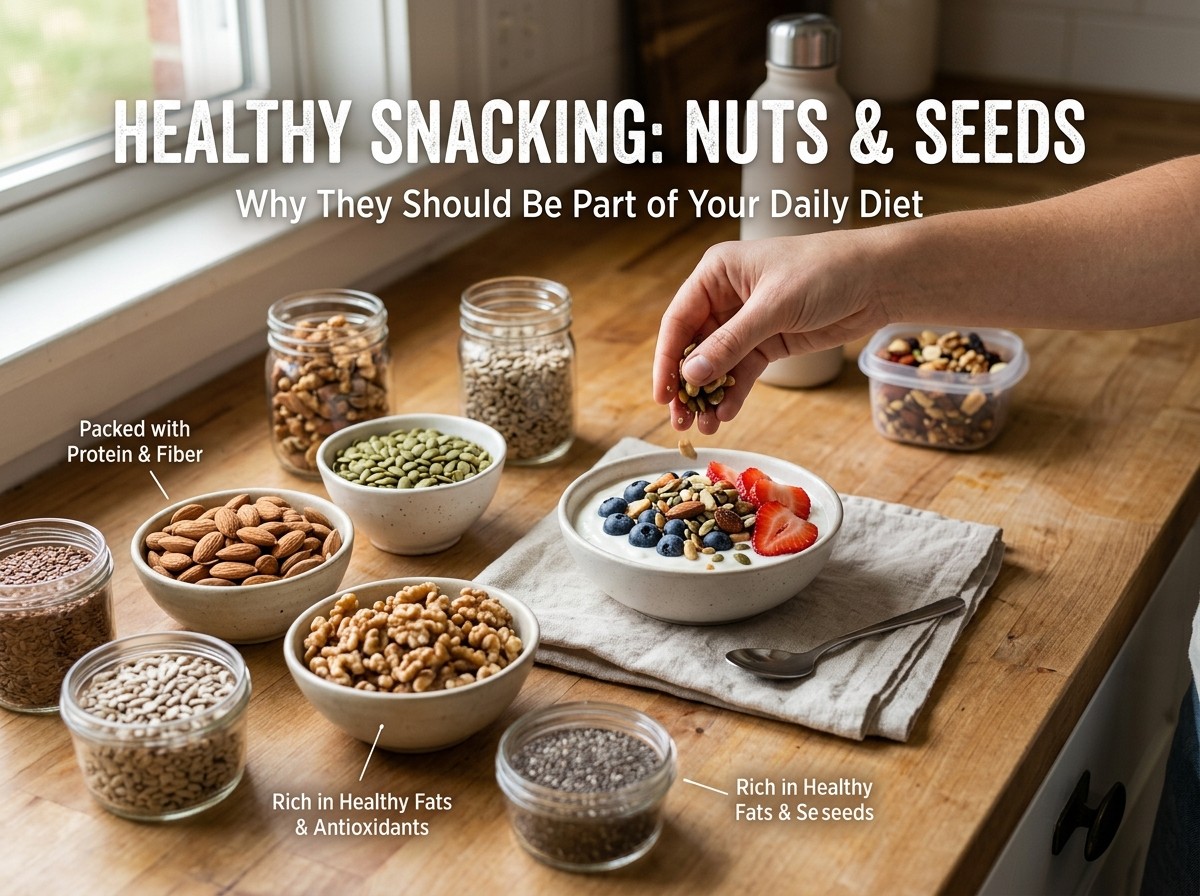
Nuts and Seeds: Nutritional Benefits and Simple Ways to Include Them in Your Diet
Nuts and seeds are small foods that can provide a wide range of nutrients. They are commonly included in balanced diets because they contain combinations of protein, fiber, healthy fats, vitamins, and minerals. From almonds and walnuts to chia and pumpkin seeds, different varieties offer different nutritional profiles.
Adding a variety of nuts and seeds to everyday meals can be a simple way to increase the nutritional value of a diet without making major changes to eating habits.
Why Are Nuts and Seeds Nutritionally Valuable?
Nuts and seeds are naturally nutrient-dense foods. Many varieties contain unsaturated fats, plant-based protein, dietary fiber, vitamins, and minerals. Their nutritional composition makes them suitable for meals and snacks throughout the day.
For example, almonds are known for their vitamin E and calcium content, while walnuts provide alpha-linolenic acid (ALA), a plant-based omega-3 fatty acid. Seeds such as chia and flax are also sources of ALA. The exact nutrients vary depending on the type and serving size.
A useful overview of different varieties can be found when exploring nuts and seeds and their nutritional characteristics.
Common Types of Nuts
There are many types of nuts available, each with its own taste and nutritional profile. Some commonly consumed varieties include:
Almonds
Almonds provide protein, fiber, vitamin E, magnesium, and other nutrients. They can be eaten on their own or added to breakfast dishes, salads, and homemade snacks.
Walnuts
Walnuts are particularly notable for their plant-based omega-3 fatty acid content. They can be added to oatmeal, yogurt, salads, or baked dishes.
Cashews
Cashews provide protein, unsaturated fats, magnesium, copper, and other minerals. Their creamy texture also makes them useful in both sweet and savory recipes.
Pistachios
Pistachios contain protein, fiber, healthy fats, and several vitamins and minerals. They can be eaten as a snack or incorporated into salads and other dishes.
Peanuts
Although peanuts are botanically legumes rather than tree nuts, they are commonly grouped with nuts because of their similar nutritional characteristics. They provide protein, healthy fats, and fiber.
Popular Types of Seeds
Seeds can also make useful additions to everyday meals. Some common choices include chia seeds, flax seeds, pumpkin seeds, sunflower seeds, and sesame seeds.
Chia Seeds
Chia seeds are a source of fiber, protein, calcium, and plant-based omega-3 fatty acids. They can be added to yogurt, smoothies, oatmeal, or overnight preparations.
Flax Seeds
Flax seeds contain fiber and ALA. Ground flax seeds are often added to cereals, smoothies, baked foods, and other recipes.
Pumpkin Seeds
Pumpkin seeds provide protein and minerals such as magnesium, zinc, and phosphorus. They can be eaten as a snack or sprinkled over salads and soups.
Sunflower Seeds
Sunflower seeds contain healthy fats, protein, vitamin E, and minerals. They can be added to salads, breakfast bowls, or homemade snack mixes.
How to Add Nuts and Seeds to Everyday Meals
One of the advantages of nuts and seeds is their versatility. They do not need to be consumed separately as snacks. They can be incorporated into regular meals in several ways.
For breakfast, nuts and seeds can be added to oatmeal, yogurt, cereal, or smoothies. During lunch, sunflower or pumpkin seeds can provide additional texture to salads. Chopped walnuts or almonds can also be used as toppings.
For an afternoon snack, a small portion of unsalted nuts can be combined with fresh or dried fruit. Seeds can also be included in homemade energy bites or snack mixes.
At dinner, nuts and seeds can be incorporated into salads, vegetable dishes, grain bowls, and sauces.
Portion Size and Moderation
Although nuts and seeds contain many nutrients, they are also relatively energy-dense. Eating very large portions can significantly increase overall calorie intake.
A practical approach is to focus on moderate portions and include them as part of a varied diet. Choosing unsalted varieties can also help reduce sodium intake, while avoiding heavily sugar-coated or highly processed versions may be preferable for everyday consumption.
Choosing and Storing Nuts and Seeds
Freshness is important because the natural fats in nuts and seeds can become rancid when exposed to heat, light, oxygen, or moisture for extended periods.
When purchasing them, check the packaging and expiry information. Store nuts and seeds in airtight containers and keep them in a cool, dry place. Some varieties may benefit from refrigeration, particularly when they are purchased in larger quantities or are not consumed quickly.
It is also useful to check ingredient labels on flavored or packaged products, as some may contain added sugar, salt, oils, or other ingredients.
Are Nuts and Seeds Suitable for Everyone?
Nuts and seeds can be part of a healthy diet for many people, but individual dietary needs vary. Nut allergies are an important consideration, particularly for children and people with known food allergies.
People following specific diets or managing medical conditions may also need individualized dietary advice. When there is uncertainty about whether a particular food is appropriate, consulting a qualified healthcare or nutrition professional is recommended.
The Importance of Variety in a Balanced Diet
No single food provides every nutrient the body needs. A balanced eating pattern generally includes a variety of vegetables, fruits, whole grains, protein sources, and healthy fats.
Nuts and seeds can complement this variety by providing nutrients that are useful in everyday meals. Rotating between different types can also make meals more interesting while providing a broader range of nutrients.
Final Thoughts
Nuts and seeds are versatile foods that can easily be incorporated into breakfast, snacks, salads, main meals, and homemade recipes. Their combination of protein, fiber, healthy fats, vitamins, and minerals makes them useful components of a varied diet.
The best approach is to choose a variety of foods, pay attention to portions, and select minimally processed options where appropriate. Small, consistent additions such as nuts and seeds can make everyday meals more nutritious while keeping healthy eating practical and enjoyable.
Related Blog

6ab301e068635.jpg)













6aa847276cd93.png)









6a9fa7a209e73.jpg)





6a98551d6c9c3.png)












































6a7b248dbcf8b.jpeg)













6a6350a4893cb.png)

6a606c6a4b011.jpg)












6a50e9b09fb4e.jpg)

















6a2bcd56d8f33.jpg)
6a2c0d1d309d3.jpg)

6a211cc2a7dc0.png)

6a18313161c5a.jpg)





























69cb4b7827b08.webp)















68ec9e22634a4.png)




























68edf1fee9090.jpg)

















68f0a0f5a49dc.png)























69dcdb1cbe702.jpg)