
Importance of eSignatures in UAE Business Transactions in 2027
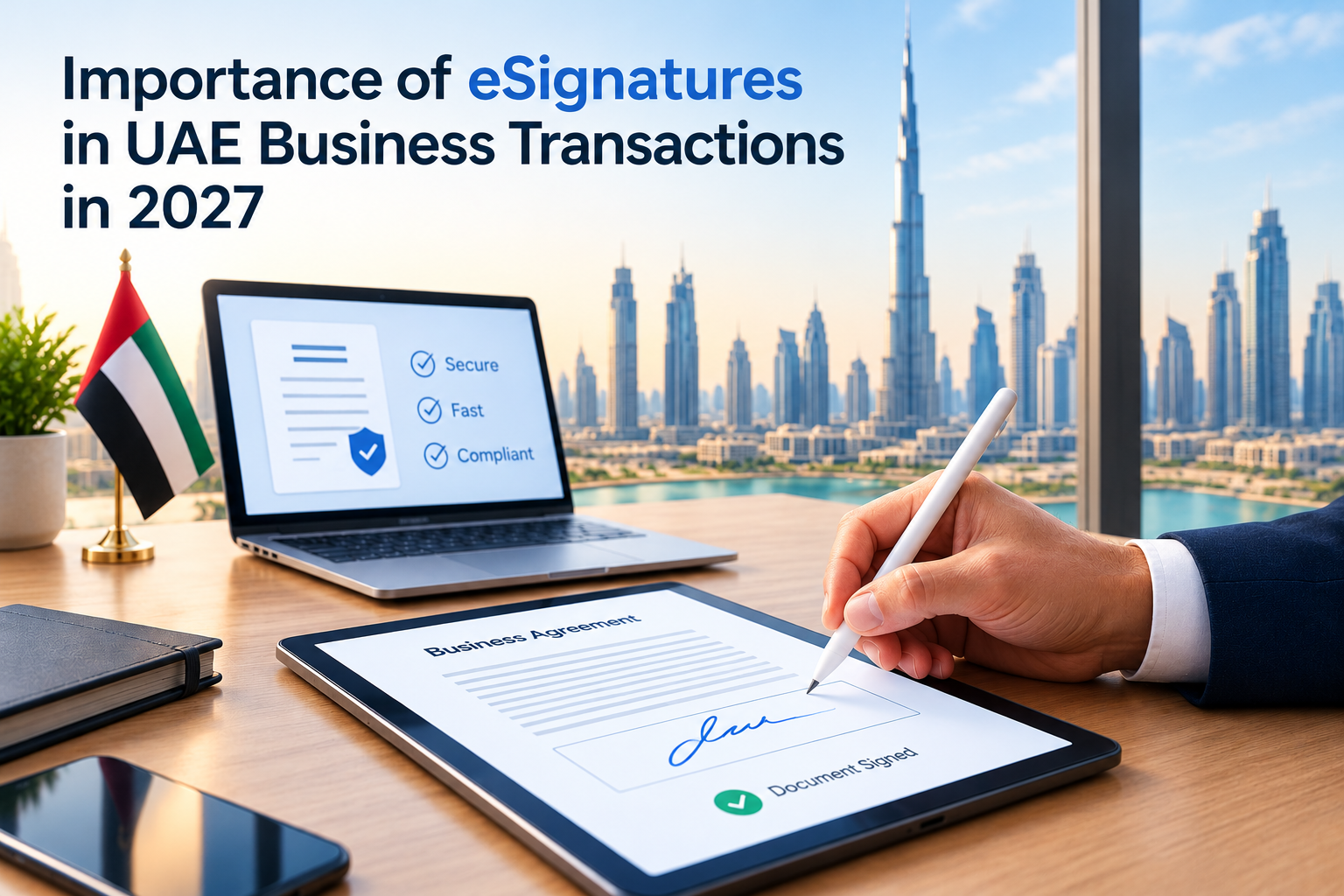
As businesses across the United Arab Emirates continue to embrace digital transformation, electronic signatures are becoming an essential part of modern commercial operations. From signing supplier agreements and employment contracts to approving invoices and completing client onboarding, organisations increasingly need faster, more secure, and more convenient ways to execute documents.
In 2027, the growing use of digital business platforms, remote working arrangements, and cross-border partnerships will make electronic signing an important tool for companies of all sizes. Adopting an eSignature in UAE business processes can help organisations reduce paperwork, accelerate approvals, improve record management, and provide a smoother experience for customers, employees, and business partners.
However, electronic signatures are not simply digital replacements for handwritten signatures. When implemented correctly, they can form part of a reliable document management process that supports accountability, security, and legal compliance.
Understanding Electronic Signatures in the UAE
An electronic signature is an electronic method used to identify a signatory and indicate their intention to approve or agree to the contents of a document. Depending on the platform and transaction, it may involve typing a name, drawing a signature, approving a document through an authenticated account, or using a digital certificate.
The UAE has established a legal framework for electronic transactions through Federal Decree-Law No. 46 of 2021 on Electronic Transactions and Trust Services, supported by relevant implementing regulations. This framework addresses electronic documents, signatures, trust services, and the conditions under which electronic transactions can receive legal recognition.
The law does not mean that every electronic signature is automatically suitable for every transaction. The appropriate signing method depends on the document, the parties involved, applicable legislation, and the level of identity verification and security required. Businesses should assess these factors before selecting an electronic signing solution.
Faster Business Transactions and Approvals
Speed is one of the most significant advantages of electronic signatures. Traditional document signing may involve printing, scanning, courier services, arranging meetings, and waiting for multiple parties to sign. These steps can delay commercial decisions and create unnecessary administrative work.
Electronic signing allows authorised parties to review and sign documents remotely, often from different locations and devices. Businesses can send agreements for signature, receive notifications when recipients complete the process, and monitor outstanding approvals through a central dashboard.
For example, a UAE-based consultancy working with an overseas client can circulate a service agreement electronically rather than exchanging printed documents internationally. Similarly, procurement teams can obtain supplier approvals without waiting for physical paperwork.
By shortening approval cycles, organisations can improve operational efficiency, respond to opportunities more quickly, and dedicate more time to strategic business activities.
Improved Security and Fraud Prevention
Security is a major consideration when handling commercial agreements, financial records, and confidential business information. Paper-based signing processes can expose documents to risks such as unauthorised access, signature forgery, document loss, and unnoticed alterations.
Modern electronic signature platforms can help reduce these risks through features such as identity verification, access controls, encryption, timestamps, and audit trails. Depending on the provider and service level, an audit trail may record when a document was sent, viewed, signed, and completed.
Some platforms also use digital certificates and cryptographic methods to help verify a signatory's identity and detect changes made to a signed document.
Nevertheless, security depends on how the system is configured and used. Businesses should choose reputable providers, enforce appropriate authentication, restrict access to sensitive documents, and establish procedures for verifying unusual or high-value transactions.
Legal Validity and Regulatory Compliance
Legal recognition is one of the most important considerations when introducing electronic signatures into UAE business operations. Federal Decree-Law No. 46 of 2021 provides the principal federal framework for electronic transactions and trust services, including electronic signatures and electronic documents.
Under this framework, electronic records and signatures may satisfy relevant writing and signing requirements when the applicable legal conditions are met. The UAE also regulates trust service providers and recognises different levels of electronic trust and security.
For businesses, this means electronic signing can support many routine commercial activities, including agreements, approvals, and other business documentation. However, organisations must not assume that every document can be signed electronically without additional formalities.
Certain transactions may be subject to specific legal requirements, prescribed authentication methods, notarisation, registration, or other procedures. Businesses operating in specialised sectors or financial free zones should also check the rules applicable to their particular transaction.
To maintain compliance, organisations should review their document types, establish clear signing policies, and seek qualified legal advice when dealing with high-value, regulated, or legally sensitive agreements.
Cost Savings and Reduced Paperwork
Printing, storing, transporting, and managing physical documents can create substantial administrative expenses, especially for organisations that process large volumes of contracts.
Electronic signatures help reduce spending on paper, ink, printing equipment, courier services, and physical storage. They can also minimise the time employees spend chasing signatures, organising files, and correcting administrative mistakes.
For small and medium-sized enterprises in the UAE, these savings can be particularly valuable. Instead of investing heavily in paper-based administration, businesses can allocate resources to customer service, employee development, technology, and expansion.
The overall financial benefit will depend on the number of documents processed, the subscription cost of the signing platform, and the extent to which the business automates its existing workflow.
Supporting Remote Work and International Business
The UAE is an international business hub, connecting companies, investors, suppliers, and customers across different countries. Many commercial relationships therefore involve parties who cannot conveniently meet in person.
Electronic signatures allow authorised participants to complete many signing processes remotely, helping businesses coordinate agreements across time zones and geographical boundaries.
This capability is useful for employment contracts, consulting agreements, supplier arrangements, service contracts, and client onboarding. Human resources teams can issue employment documentation electronically, while sales teams can obtain customer approvals without requiring physical meetings.
However, cross-border transactions may involve different legal systems, industry regulations, and document authentication requirements. Companies should verify whether an electronic signature will be accepted in the relevant jurisdiction and whether additional formalities are necessary.
Better Customer Experience and Document Management
Customers increasingly expect convenient digital services. Requiring them to print, sign, scan, and return documents can create unnecessary friction during onboarding, purchasing, and service delivery.
Electronic signing simplifies these interactions by allowing customers to review and sign documents using compatible devices. Automated reminders and clear signing instructions can also help reduce delays and incomplete submissions.
Another advantage is improved document organisation. Many platforms provide centralised storage, searchable records, completion notifications, and integrations with customer relationship management or document management systems.
These capabilities help businesses locate signed agreements, monitor contract progress, and maintain consistent records. However, organisations should ensure that their retention policies, access permissions, backup procedures, and data protection practices meet applicable legal and contractual requirements.
How to Choose the Right eSignature Solution in 2027
Selecting an appropriate electronic signature platform requires more than comparing subscription prices. Businesses should evaluate the following factors:
- Legal suitability: Confirm that the signing method meets the requirements of the relevant transaction and applicable UAE legislation.
- Identity verification: Choose authentication measures appropriate to the document's importance and risk level.
- Security features: Look for encryption, access controls, audit trails, and document integrity protections.
- Integration capabilities: Check whether the platform connects with existing business applications and document management systems.
- Ease of use: Ensure employees, customers, and business partners can complete signing processes without unnecessary complexity.
- Data management: Review storage locations, retention policies, privacy protections, and access to completed documents.
- Scalability and cost: Consider transaction volumes, user requirements, support, and future business growth.
Where a transaction requires a qualified electronic signature or another prescribed trust service, businesses should verify the provider's relevant authorisation and service status through the UAE Telecommunications and Digital Government Regulatory Authority (TDRA).
Conclusion
Electronic signatures are becoming an important component of efficient, secure, and digitally connected business operations in the UAE. In 2027, their value extends beyond convenience to include faster approvals, reduced administrative costs, stronger document traceability, improved customer experiences, and better support for remote and international transactions.
However, successful adoption requires careful attention to legal requirements, security controls, identity verification, and document retention. By choosing a suitable platform and implementing clear internal policies, UAE businesses can make electronic signing a reliable part of their digital transformation strategy.
Organisations that combine the convenience of electronic signing with appropriate legal and technical safeguards will be better positioned to manage agreements efficiently, strengthen business relationships, and adapt to the evolving demands of the digital economy.
Related Blog






















6ad6096d44d50.jpg)




6ad1c7874e895.png)



6acdefb0a58d8.jpeg)






















6ab301e068635.jpg)















6aa847276cd93.png)










6a9fa7a209e73.jpg)






6a98551d6c9c3.png)


































6a7b248dbcf8b.jpeg)











6a6350a4893cb.png)

6a606c6a4b011.jpg)












6a50e9b09fb4e.jpg)

















6a2bcd56d8f33.jpg)
6a2c0d1d309d3.jpg)

6a211cc2a7dc0.png)

6a18313161c5a.jpg)





























69cb4b7827b08.webp)


























694fa33ac18ea.jpeg)






693e715695a8f.png)


693923523a9ac.png)









68ec9e22634a4.png)


























68edf1fee9090.jpg)

















68f0a0f5a49dc.png)




















69dcdb1cbe702.jpg)
6aed985f6b5b8.webp)