
How to Notarize a Power of Attorney in Dubai: A Practical UAE Guide
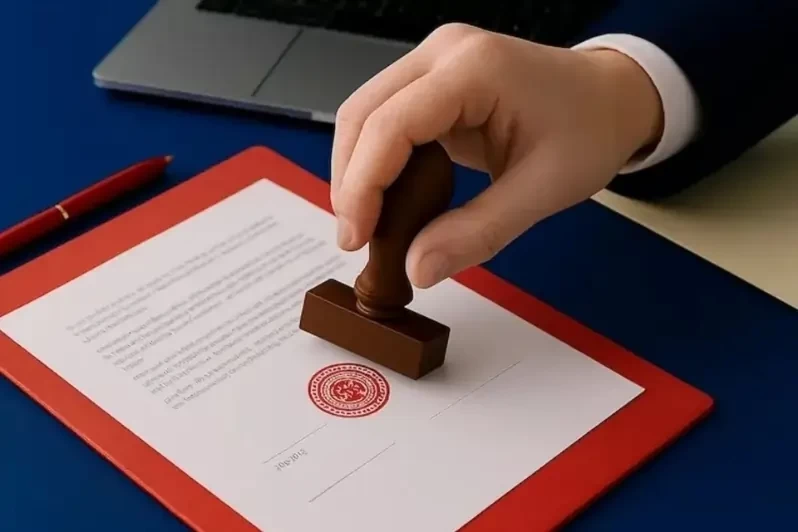
How to Notarize a Power of Attorney in Dubai: A Practical UAE Guide
A Power of Attorney (POA) is an important legal document that allows one person to authorize another person to act on their behalf. In Dubai and across the UAE, a properly prepared and notarized Power of Attorney can be used for a wide range of personal, property, financial, and business matters.
Whether you are a UAE resident, an overseas investor, a business owner, or someone who cannot personally attend to a particular transaction, understanding how a Power of Attorney works can help you avoid unnecessary delays and document-related problems.
What Is a Power of Attorney?
A Power of Attorney is a legal authorization given by one person, known as the principal, to another person, known as the attorney, allowing the attorney to perform specific actions on the principal's behalf.
The authority granted can be broad or limited. For example, a POA may authorize someone to:
Complete a property-related transaction
Represent a person before government authorities
Manage certain business matters
Sign specific contracts
Handle banking or financial procedures where accepted
Complete company-related transactions
Follow up on legal or administrative procedures
The exact powers should always be clearly stated in the document. A general statement may not be sufficient when a government authority, bank, court, or other institution requires specific authorization.
Why Is Notarization Important in Dubai?
Notarization provides an official process for verifying the identity and execution of a legal document.
Under Dubai's Notaries Public legislation, the identity of parties can be verified using documents such as a passport or Emirates ID. Dubai's legislation also provides requirements concerning the form and language of instruments processed by a Notary Public.
For many legal and administrative transactions, an official notarized POA provides the evidence that the person granting the authority actually executed the document and authorized the stated actions.
The UAE Government also notes that an official Power of Attorney attested by a Notary Public may be required when appointing a representative for certain legal proceedings.
What Information Is Usually Required?
The exact requirements can vary depending on the type of POA and the transaction involved. However, applicants should generally be prepared to provide identification and information concerning both the principal and the attorney.
Commonly required information may include:
Full legal name of the principal
Passport or Emirates ID details
Full legal name of the attorney
Passport or Emirates ID details of the attorney
Contact information
Details of the powers being granted
Duration of the POA, where applicable
Supporting corporate or property documents when relevant
For corporate Power of Attorney documents, additional documentation may be necessary to establish the authority of the person signing on behalf of the company.
This is particularly important where a director, manager, shareholder, or authorized signatory is granting powers on behalf of a company.
Drafting the Power of Attorney
One of the most important stages is drafting the document itself.
A POA should clearly explain what the attorney is authorized to do. If the powers are too vague, the receiving authority may not accept the document for the intended transaction.
For example, instead of simply stating that the attorney can "deal with the property," a property-related POA may need to identify the relevant authority and specify whether the attorney can sell, purchase, lease, register, transfer, collect documents, or perform other particular actions.
The same principle applies to business POAs. If the document relates to a company, the powers should correspond with the company's requirements and the authority of the person granting the POA.
A carefully drafted document can therefore reduce the risk of having to amend or notarize a new document later.
Arabic and English Versions
Arabic is the official language used for instruments processed by a Dubai Notary Public. Depending on the circumstances, an English version or another language may be prepared alongside the Arabic document for the parties' understanding or for use with other organizations.
Anyone preparing a bilingual POA should make sure that the two versions accurately reflect the same legal powers.
This is especially important when the document will be used outside the UAE, as the receiving country may have additional translation, legalization, embassy, or attestation requirements.
Can a Power of Attorney Be Issued Electronically?
The UAE Ministry of Justice provides digital services for certain contracts and legal documents, including Digital Power of Attorney procedures. Its published process includes UAE Pass registration, electronic submission, payment of applicable fees, electronic signing, and receiving the document electronically.
The availability and procedure for electronic notarization can depend on the type of document and the applicable service channel.
Applicants should therefore confirm the current procedure before starting the transaction, particularly when the principal is outside the UAE or when the POA will be used for a specialized transaction.
What If the Principal Is Outside the UAE?
People living outside the UAE may still need to issue a POA for use in Dubai. In such cases, the process can involve additional steps.
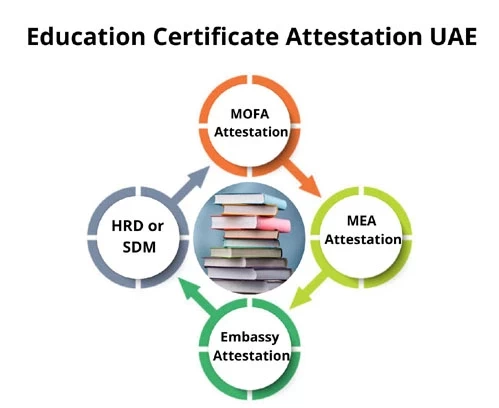
Depending on where the document is issued, it may need to be notarized or legalized in the country of origin, authenticated by the relevant authorities, attested by the UAE Embassy or Consulate, and subsequently attested or processed in the UAE.
The exact chain depends on the country where the document was issued and the intended use of the POA.
For this reason, anyone preparing an overseas POA should check the requirements of both the issuing country and the UAE authority that will receive the document.
Common Mistakes to Avoid
Several problems can make a Power of Attorney difficult to use.
1. Using vague powers
The POA should clearly identify the actions the attorney is authorized to perform.
2. Incorrect names or identification details
Names should match the relevant passports, Emirates IDs, trade licenses, or other official documents.
3. Missing corporate authority
For company-related POAs, the person signing must have the appropriate authority to grant the powers.
4. Ignoring the intended use
A POA prepared for one purpose may not automatically be suitable for another transaction.
5. Failing to consider overseas requirements
If the document will be used outside the UAE, additional legalization or attestation may be required.
How to Prepare Before Notarization
Before beginning the notarization process, it is useful to prepare all relevant documents and confirm the exact powers required.
A practical checklist includes:
Identify the principal and attorney.
Determine exactly what authority is required.
Collect valid identification documents.
Prepare any supporting corporate, property, or financial documents.
Review the Arabic and English wording carefully.
Confirm whether the POA will be used inside or outside the UAE.
Check whether additional attestation or legalization will be required.
Confirm the current notarization procedure and applicable fees.
Professional document preparation services can also help applicants understand the drafting, translation, notarization, and document-attestation stages. For example, businesses and individuals looking for assistance with Power of Attorney services in Dubai can review the services available through Quick Link.
Final Thoughts
A Power of Attorney can make it much easier for someone else to complete legal, administrative, property, or business matters on your behalf. However, the usefulness of the document depends heavily on how accurately it is drafted and whether it meets the requirements of the authority that will receive it.
Before signing a POA in Dubai, applicants should consider the exact purpose of the document, the powers being granted, the identity documents involved, and whether the document will later need to be used outside the UAE.
Taking the time to prepare the document correctly can help prevent rejection, repeated notarization, and unnecessary delays.
Related Blog



6aa847276cd93.png)














































6a6350a4893cb.png)

6a606c6a4b011.jpg)









6a50e9b09fb4e.jpg)








6a2bcd56d8f33.jpg)
6a2c0d1d309d3.jpg)
6a211cc2a7dc0.png)

6a18313161c5a.jpg)












69cb4b7827b08.webp)













68ec9e22634a4.png)

























68edf1fee9090.jpg)

















68f0a0f5a49dc.png)





















69dcdb1cbe702.jpg)