
How Dubai’s Infrastructure Can Stay Ready for Future Growth
6ad1c7874e895.png)
Dubai’s transformation from a rapidly growing city into a global business and tourism destination has created a constant need for dependable infrastructure. New communities, commercial developments, industrial areas, and transport connections continue to reshape the urban environment. Behind this expansion is a complex network of roads, utilities, drainage systems, and underground services that must work together efficiently. Grp Pipeline Contractors In Dubai can contribute to this wider infrastructure environment by supporting the development of durable pipeline systems designed for demanding applications and long-term performance.
Infrastructure Must Think Beyond Today
One of the biggest challenges in a rapidly developing city is predicting future requirements.
A road or utility network may meet today's demand, but changing population patterns, new developments, increased traffic, and expanding commercial activity can place additional pressure on existing infrastructure.
This makes forward planning essential.
Infrastructure planners need to consider not only how a system will operate when it is first completed, but also how it may perform five, ten, or twenty years later.
Future-ready infrastructure should therefore allow for:
Increasing demand
Potential expansion
Easier maintenance
Changing land use
Improved technology
Environmental considerations
Long-term operational efficiency
Planning with these factors in mind can reduce the need for major modifications later.
Roads and Utilities Must Work Together
Urban infrastructure does not operate in isolation.
A newly constructed road may need to accommodate water networks, drainage systems, telecommunications, electrical infrastructure, and other underground services.
Poor coordination between these systems can create construction conflicts and increase project costs.
For example, installing an underground utility after a road has already been completed may require excavation and surface reinstatement. If the work had been properly coordinated during the initial development stage, unnecessary disruption could potentially be reduced.
This is why infrastructure planning should consider the entire project environment rather than treating each system as a separate task.
The Importance of Accurate Surveys
Good infrastructure begins with accurate information.
Before construction starts, project teams need to understand the existing conditions of the site.
Surveys can help identify ground levels, existing structures, utility locations, access conditions, and other factors that may affect the proposed development.
Accurate information allows designers and engineers to make better decisions about alignment, levels, connections, and construction sequencing.
It can also reduce the possibility of unexpected problems during excavation.
In complex urban environments, even small differences between drawings and actual site conditions can lead to delays.
Materials Influence Infrastructure Lifespan
Infrastructure materials must be selected according to the conditions in which they will operate.
A material that performs well in one application may not necessarily be suitable for another.
Pipeline systems, for example, may need to withstand pressure, chemical exposure, temperature variations, ground movement, and other environmental factors.
Road construction materials face their own challenges, including repeated traffic loads and environmental exposure.
Selecting materials based on actual project requirements can improve durability and reduce the likelihood of premature deterioration.
Underground Infrastructure Deserves Special Attention
Much of a modern city's essential infrastructure is hidden beneath the surface.
Because underground systems are difficult to inspect once construction is complete, installation quality becomes particularly important.
A problem inside an underground network may remain unnoticed until it affects surrounding infrastructure or service performance.
Proper installation, testing, documentation, and inspection can therefore play a major role in long-term reliability.
Future maintenance should also be considered before the system is covered.
Access points, connection arrangements, and accurate records can make later inspection and repair significantly easier.
Construction Quality Is a Long-Term Investment
Fast development should not mean compromising construction quality.
A project that is completed quickly but requires frequent repairs may create greater costs over its lifetime than a project built with stronger attention to quality from the beginning.
Quality control should be maintained throughout the construction process.
This may involve:
Material inspections
Installation checks
Dimensional verification
Testing
Safety inspections
Workmanship assessments
Documentation
Final commissioning
Each stage contributes to the performance of the completed infrastructure.
Managing Construction in Developed Areas
Building new infrastructure in an undeveloped area can provide more flexibility.
Urban construction is different.
Existing buildings, roads, businesses, pedestrians, utilities, and traffic may all need to remain operational while construction progresses.
Project teams therefore need to manage access and disruption carefully.
Phased construction can help divide complex work into manageable sections.
Temporary routes, controlled work zones, traffic arrangements, and carefully planned excavation can also help maintain public safety.
The objective is to balance construction progress with the needs of people and businesses surrounding the project.
Drainage Is a Fundamental Requirement
Drainage is sometimes considered secondary to the main infrastructure, but it plays a major role in protecting roads and surrounding areas.
Poor drainage can allow water to accumulate around pavements, foundations, and underground systems.
Effective drainage planning should consider surface levels, runoff patterns, collection systems, discharge arrangements, and connections to wider networks.
When drainage is integrated into the original design, the risk of water-related problems can be reduced.
This becomes particularly important in large developments where multiple surfaces and structures influence how water moves through the site.
Maintenance Should Begin With Design
Maintenance is often considered something that happens after construction.
A better approach is to consider maintenance requirements during design.
Engineers can evaluate how easily components can be inspected, accessed, repaired, or replaced.
This approach can provide significant benefits over the life of the infrastructure.
For underground networks, accurate documentation is especially valuable.
Future maintenance teams may need information about pipe routes, connection points, depths, materials, and previous repair work.
Without reliable records, even relatively simple maintenance activities can become more complicated.
Safety Must Remain Central
Infrastructure projects involve workers, equipment, vehicles, and members of the public.
Safety should therefore be integrated into every stage of project delivery.
Construction zones should be organised to separate people from hazardous activities wherever possible.
Equipment movement, excavation areas, temporary access routes, and material storage all require careful management.
Safety planning also needs to continue after construction.
Completed roads, utility systems, and other infrastructure should be designed and maintained in ways that support safe everyday use.
Technology Can Improve Project Coordination
Modern infrastructure development increasingly benefits from better digital planning and information management.
Accurate digital drawings can help different teams coordinate their work.
Surveying technology can provide more precise information about site conditions, while digital project records can make important information easier to access.
Technology can also support inspections and maintenance planning.
The goal is not to use technology simply because it is available. It should be used where it provides meaningful improvements in accuracy, communication, efficiency, or decision-making.
Building Infrastructure With Sustainability in Mind
Long-lasting infrastructure can support more responsible development.
When roads, pipelines, drainage systems, and other assets remain functional for longer, the need for frequent reconstruction can be reduced.
Durable materials, efficient construction methods, preventive maintenance, and responsible resource use can all contribute to better long-term performance.
Sustainability should therefore be viewed as part of good infrastructure management rather than as a separate objective.
Preparing for Dubai’s Next Phase
Dubai's continued growth will bring new infrastructure requirements.
Future developments may include larger residential communities, expanded commercial districts, new industrial facilities, and additional transport connections.
Each development will place new demands on existing infrastructure.
The strongest approach is to create systems that can adapt.
This means considering future capacity, potential expansion, maintenance access, technological improvements, and changing usage patterns during the planning stage.
Infrastructure that can adapt is more likely to remain useful as the city changes.
Creating Infrastructure That Lasts
Dubai's infrastructure success is not measured only by how quickly a project is completed.
Long-term reliability, safety, accessibility, maintainability, and performance are equally important.
Every road, pipeline, drainage system, and utility network forms part of a much larger urban environment. When these systems are carefully planned and coordinated, they can support development while reducing future disruption.
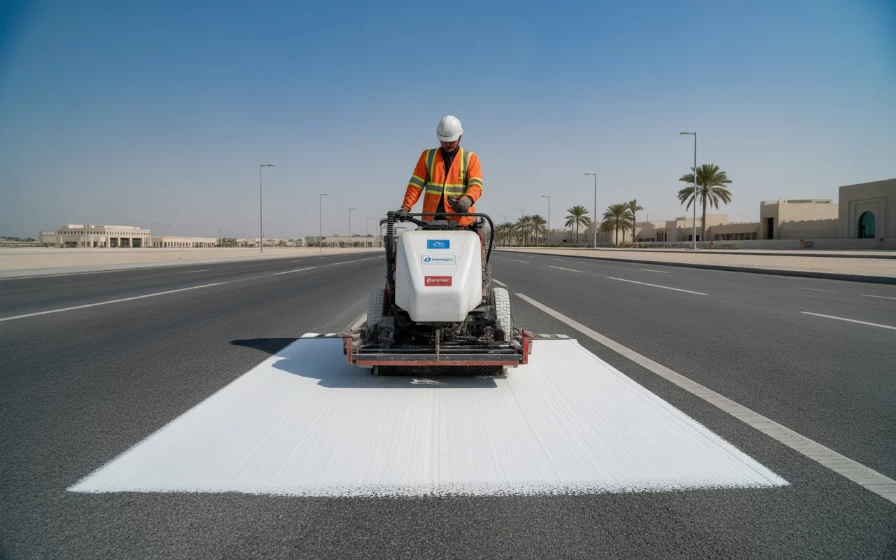
For projects involving road development and related infrastructure, working with experienced Road Marking Contractors In Dubai can also help ensure that completed routes provide clear visual guidance and safer movement for the people who depend on them every day.
Related Blog























6ad6096d44d50.jpg)




6acdefb0a58d8.jpeg)

















6ab301e068635.jpg)














6aa847276cd93.png)








6a9fa7a209e73.jpg)





6a98551d6c9c3.png)





































6a7b248dbcf8b.jpeg)










6a6350a4893cb.png)
6a606c6a4b011.jpg)










6a50e9b09fb4e.jpg)











6a2bcd56d8f33.jpg)
6a2c0d1d309d3.jpg)

6a211cc2a7dc0.png)

6a18313161c5a.jpg)
























69cb4b7827b08.webp)





















694fa33ac18ea.jpeg)






693e715695a8f.png)


693923523a9ac.png)







68ec9e22634a4.png)




















68edf1fee9090.jpg)












68f0a0f5a49dc.png)





















69dcdb1cbe702.jpg)
6aed985f6b5b8.webp)