
How Much Does Website Design Cost in Dubai? (2026 Pricing Guide)
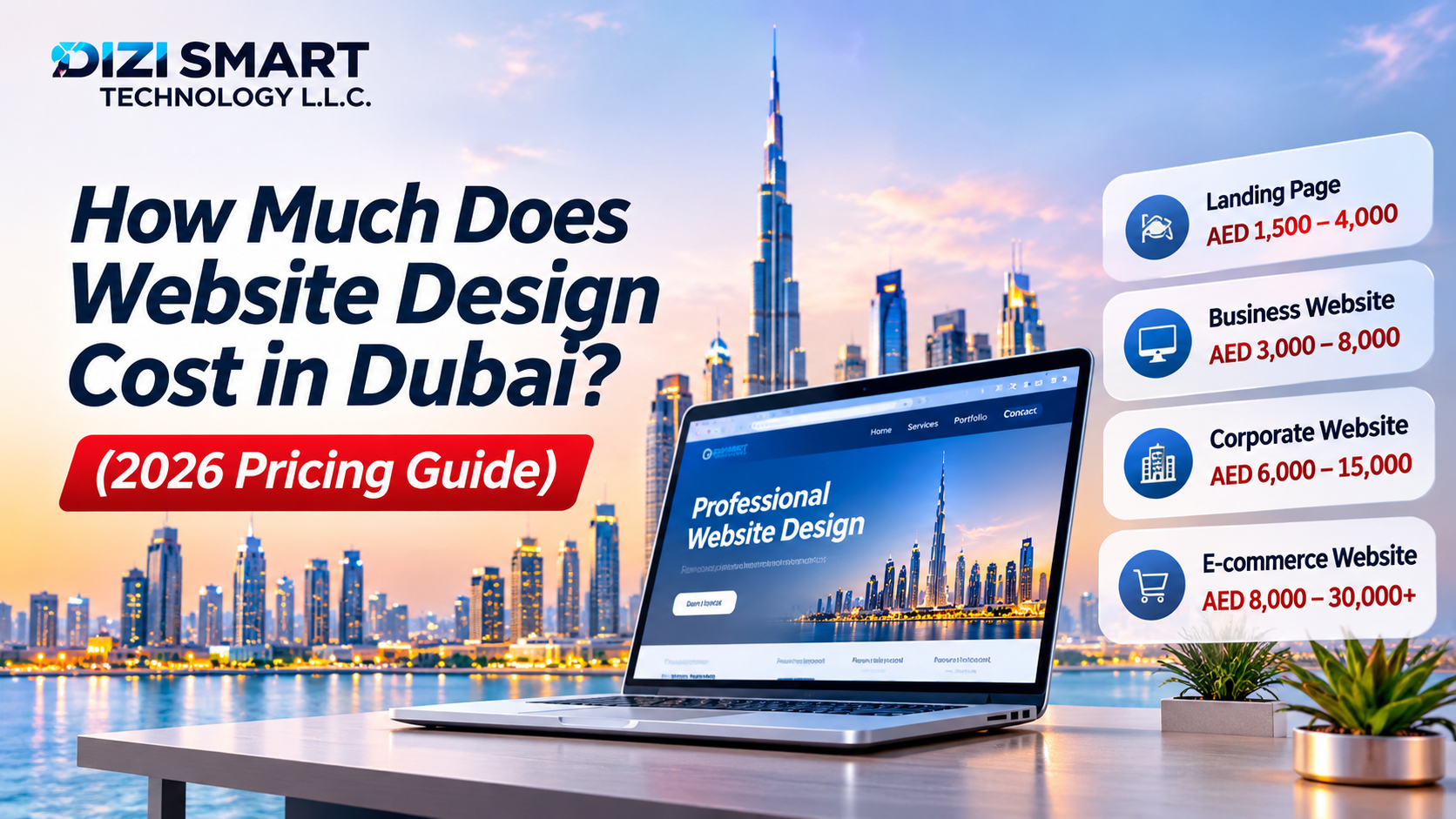
How Much Does Website Design Cost in Dubai? (2026 Pricing Guide)
A professional website is an important investment for businesses operating in Dubai and across the United Arab Emirates. Whether you are launching a startup, managing a small business, building an online store or expanding an established company, your website can help customers discover your services, understand your brand and contact your team.
One of the most common questions businesses ask is: how much does website design cost in Dubai?
The answer depends on the type of website, its functionality, design requirements, content, integrations and ongoing maintenance needs. A simple business website generally costs less than a custom e-commerce platform or a complex web application.
This guide explains typical website design price ranges in Dubai, the factors that affect the cost and how businesses can choose a suitable web development partner.
Website Design Cost in Dubai: Estimated Prices for 2026
The following figures are indicative budgeting estimates in UAE dirhams (AED), not fixed market quotations. Actual prices vary between agencies and projects.
Basic landing page: AED 1,500–4,000
Small business website: AED 3,000–8,000
Professional corporate website: AED 6,000–15,000
Custom business website: AED 10,000–25,000+
E-commerce website: AED 8,000–30,000+
Custom web application: AED 20,000–75,000+
Large or complex online platform: AED 50,000–150,000+
These ranges overlap because projects differ significantly. A website with only a few pages and standard functionality may be less expensive than a larger website requiring custom design, integrations, multilingual content or advanced features.
Always request a written quotation based on your actual requirements.
1. Basic Website Design Cost in Dubai
Estimated budget: AED 1,500–4,000.
A basic website or landing page may suit freelancers, new businesses, consultants and small service providers who need a straightforward online presence.
Typical features include:
A responsive page layout
Business introduction and service information
Contact details and enquiry form
WhatsApp contact button
Basic on-page SEO setup
Links to social media profiles
The final price depends on the design approach, number of sections, content preparation and any additional integrations.
2. Small Business Website Cost
Estimated budget: AED 3,000–8,000.
A small business website usually contains several pages, such as Home, About Us, Services, Contact and frequently asked questions.
It may also include a blog, enquiry forms, maps, testimonials and basic analytics setup.
This option can be suitable for local service companies, consultants, maintenance businesses and small professional firms.
Businesses should check whether the quotation includes mobile optimisation, website security, backups and post-launch support.
3. Corporate Website Design Cost
Estimated budget: AED 6,000–15,000.
A corporate website needs to communicate a company's services, experience, credibility and business objectives clearly.
Common requirements include:
Custom page layouts and branding
Multiple service pages
Project or portfolio sections
Blog and content management
Lead-generation forms
SEO-friendly website architecture
Analytics integration
Security and performance optimisation
The price may increase if the company needs multiple languages, custom animations, CRM integrations or more advanced content management.
4. E-commerce Website Development Cost in Dubai
Estimated budget: AED 8,000–30,000+.
An e-commerce website allows businesses to display products, accept orders and manage online sales.
The cost depends on the platform, product catalogue, checkout requirements and operational integrations.
Typical features include:
Product and category pages
Shopping cart and checkout
Payment gateway integration
Shipping and delivery configuration
Inventory management
Customer accounts
Order notifications
Mobile-friendly product pages
A straightforward store with a standard theme may cost less than a custom store with complex inventory, ERP or marketplace integrations.
Businesses should also budget for payment gateway fees, platform subscriptions where applicable, product photography and ongoing maintenance.
5. Custom Website and Web Application Cost
Estimated budget: AED 20,000–75,000+.
Custom web applications may be required when a business needs functionality beyond a standard content management system or e-commerce platform.
Examples include booking systems, customer portals, dashboards, membership platforms and business management applications.
Development costs depend on user roles, database design, security requirements, third-party integrations, testing and long-term support.
For these projects, a detailed specification and phased development plan can help control costs and reduce misunderstandings.
What Factors Affect Website Design Prices in Dubai?
Website size and complexity
A five-page website usually requires less work than a large website with dozens of service pages, complex navigation and extensive content.
Custom design
A custom interface, branded visual elements and unique page layouts generally require more design and development time than a standard template.
Content creation
Professional copywriting, product descriptions, photography, video and multilingual content can add to the total budget.
SEO requirements
A project may include keyword research, page titles, meta descriptions, heading structure, internal linking, technical SEO and analytics configuration. Ongoing SEO campaigns are usually separate from one-time website development.
Integrations
Payment gateways, booking systems, CRM software, accounting tools, inventory systems and other third-party services can increase development time and costs.
Hosting and maintenance
Domain registration, hosting, backups, security monitoring, software updates and technical support may be recurring expenses. Confirm which services are included in the initial quotation.
WordPress vs Shopify vs Custom Development
Choosing the right platform can help businesses manage both initial and ongoing costs.
WordPress: Often suitable for company websites, blogs and service-based businesses that need flexible content management.
Shopify: Often suitable for businesses that want a hosted e-commerce platform with product, order and checkout management features.
Custom development: May be appropriate when a business needs specialised functionality, complex integrations or workflows that standard platforms cannot reasonably support.
The best choice depends on the business model, technical requirements, available budget and future growth plans—not simply on which platform has the lowest initial price.
How to Choose a Website Design Company in Dubai
Before hiring a web development agency, consider the following points.
Review its portfolio: Examine real websites and assess design quality, mobile usability and relevance to your industry.
Confirm the scope: Ask which pages, features, integrations and revisions are included.
Clarify ownership: Confirm access to the domain, hosting, website files, administrator accounts and any relevant licences.
Discuss SEO: Ask whether technical foundations and on-page SEO are included, and which activities require a separate contract.
Understand the timeline: Request project milestones and identify what the client must supply.
Check support arrangements: Confirm the warranty period, maintenance options, response times and additional charges.
Compare written quotations: Evaluate deliverables and service quality rather than choosing solely on price.
A reliable proposal should clearly explain what will be delivered, what is excluded and how future changes will be charged.
How Businesses Can Reduce Website Development Costs
Businesses can manage their budget without sacrificing essential quality.
Define the website's primary goals before requesting quotations.
Prepare business information, logos and existing content in advance.
Launch essential pages first and add optional features later.
Choose a platform that fits your actual requirements.
Avoid paying for integrations that do not support a clear business need.
Confirm maintenance and hosting charges before signing a contract.
Prioritise mobile usability, security and conversion-focused design.
A phased approach can help a business launch sooner while leaving room for future improvements.
Frequently Asked Questions
How much does a website cost in Dubai in 2026?
A basic landing page may cost approximately AED 1,500–4,000, while a professional corporate website may cost AED 6,000–15,000. E-commerce websites and custom applications can cost substantially more. These are indicative estimates, not guaranteed market prices.
How much does a five-page website cost in Dubai?
A straightforward five-page business website might fit within an estimated AED 3,000–8,000 budget. Custom design, copywriting, integrations and additional functionality can increase the price.
Is website hosting included in the design cost?
Not always. Some agencies include an initial hosting period, while others charge separately. Ask about domain registration, hosting renewals, SSL, backups and maintenance.
Is WordPress cheaper than custom development?
WordPress can be more cost-effective for many business websites because it offers established content management tools and a large ecosystem of themes and plugins. Custom development may be justified when specialised functionality is required.
How long does it take to build a business website?
A straightforward website may take a few weeks, while larger corporate websites, e-commerce stores and custom applications may require several months. The timeline depends on scope, approvals, content readiness and integrations.
Does website design include SEO?
It depends on the contract. Basic technical and on-page SEO setup may be included, but keyword research, content campaigns, link acquisition and ongoing SEO management are often separate services.
Should a Dubai business choose a template or custom design?
A template can be appropriate for a business with a limited budget and standard requirements. Custom design may be more suitable when branding, user experience or specialised features are important.
Conclusion
Website design costs in Dubai vary according to the project's size, design requirements, platform, integrations and ongoing support needs. A clear project scope helps businesses compare quotations and understand the value of the services offered.
Rather than choosing the cheapest option automatically, evaluate whether the proposed website meets your business objectives, provides a good customer experience and offers a practical foundation for future growth.
About Dizi Smart Technology L.L.C.
Dizi Smart Technology L.L.C. provides website design and development, SEO, digital marketing and technology solutions for businesses in Dubai and across the UAE. Visit our website to learn more about our services and explore potential solutions for your business.
Website: https://dizismarttechnology.ae/
Contact: +971 54 482 9307
Related Blog


















6ad6096d44d50.jpg)


6ad1c7874e895.png)


6acdefb0a58d8.jpeg)








6ab301e068635.jpg)












6aa847276cd93.png)








6a9fa7a209e73.jpg)



6a98551d6c9c3.png)




























6a7b248dbcf8b.jpeg)






6a6350a4893cb.png)

6a606c6a4b011.jpg)









6a50e9b09fb4e.jpg)











6a2bcd56d8f33.jpg)
6a2c0d1d309d3.jpg)

6a211cc2a7dc0.png)

6a18313161c5a.jpg)






















69cb4b7827b08.webp)





















694fa33ac18ea.jpeg)



693e715695a8f.png)


693923523a9ac.png)




68ec9e22634a4.png)























68edf1fee9090.jpg)













68f0a0f5a49dc.png)















69dcdb1cbe702.jpg)
6aed985f6b5b8.webp)