6acdefb0a58d8.jpeg)
How a Lab Furniture Consultant Helps Create Efficient Laboratory Spaces
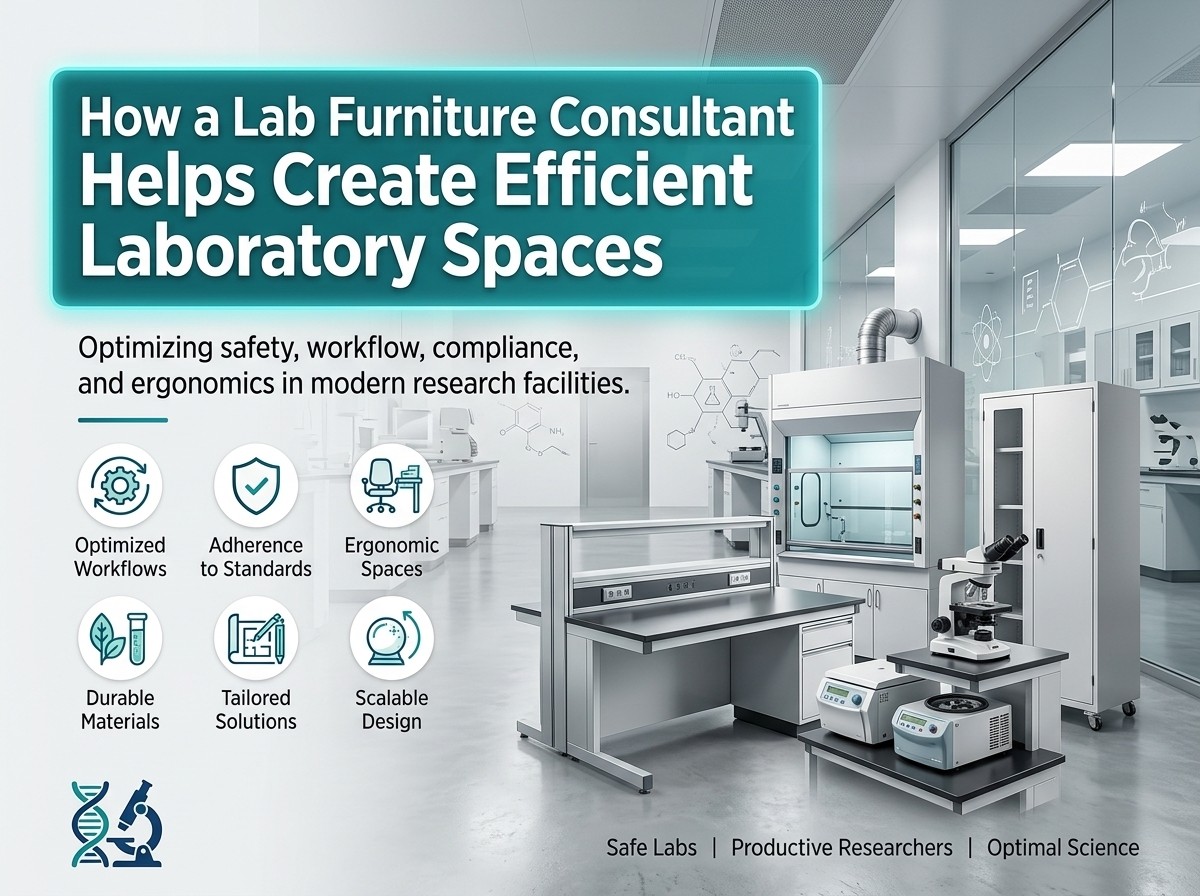
Designing a laboratory involves much more than selecting tables, cabinets, and workbenches. A well-planned laboratory needs to support safety, workflow, equipment placement, storage, ergonomics, and future expansion. This is where a professional lab furniture consultant can provide valuable guidance.
Whether the project involves a school science laboratory, medical laboratory, pharmaceutical facility, research center, or industrial testing environment, professional consultation can help ensure that the available space is used efficiently and that the furniture matches the operational requirements of the laboratory.
Why Laboratory Furniture Planning Matters
Laboratories are specialized work environments where furniture needs to withstand frequent use, chemical exposure, cleaning procedures, and heavy equipment. Poorly planned furniture layouts can create workflow problems, reduce available workspace, and make everyday laboratory activities less convenient.
A professional consultant considers factors such as:
- Available floor space
- Laboratory workflow
- Equipment dimensions and placement
- Storage requirements
- Workbench configuration
- Safety requirements
- User ergonomics
- Electrical and utility connections
- Future expansion requirements
By considering these factors before manufacturing and installation, laboratory owners can develop a workspace that is more organized and practical.
Customized Laboratory Furniture Solutions
Every laboratory has different requirements. A school science laboratory may need student workstations, storage cabinets, sinks, and demonstration tables, while a pharmaceutical or research laboratory may require specialized workbenches, chemical-resistant surfaces, storage systems, and controlled working areas.
Modern laboratory furniture solutions can include modular workbenches, wall-mounted benches, island tables, laboratory storage cabinets, sinks, seating, mobile units, and specialized laboratory systems.
Customization allows the furniture to be designed around the laboratory's actual workflow instead of forcing the laboratory to adapt to standard furniture dimensions.
Laboratory Workbenches and Workstations
Workbenches are among the most important components of a laboratory. They provide the primary working surface for experiments, sample preparation, testing, analysis, and equipment placement.
Depending on the application, laboratories may require:
- Wall-mounted workbenches
- Island workbenches
- Mobile workstations
- Heavy-duty workbenches
- Instrument workstations
- Adjustable-height tables
- Specialized work surfaces
A consultant can help determine the appropriate configuration based on equipment, user requirements, available space, and workflow.
Storage and Organization
Laboratories often contain chemicals, instruments, samples, consumables, glassware, and other materials that need organized storage. Insufficient or poorly positioned storage can create unnecessary movement and reduce workspace efficiency.
Laboratory furniture can incorporate base cabinets, wall-mounted cabinets, tall storage units, reagent shelves, and mobile storage solutions. Lockable and chemical-resistant storage options can also be considered depending on the laboratory's requirements.
Safety and Ergonomics
Safety should be an important consideration during laboratory planning. Furniture layouts need to provide sufficient working space and appropriate access to laboratory equipment and safety facilities.
Ergonomics is also important because laboratory personnel and students may spend several hours working at benches and workstations. Appropriate working heights, comfortable seating, accessible storage, and logical equipment placement can contribute to a more practical working environment.
For laboratories handling chemicals or other potentially hazardous substances, appropriate ventilation and safety equipment may also be required. Penta provides solutions that can include fume hoods, ventilation systems, laboratory sinks, emergency eyewash stations, and safety showers, depending on the project requirements.
The Role of a Consultant During Laboratory Projects
A laboratory furniture consultant can contribute throughout different stages of a project, starting with understanding the client's requirements and available space.
The process may include:
1. Space Assessment
The available laboratory area is reviewed to understand dimensions, access points, utilities, equipment requirements, and potential workflow.
2. Layout Planning
Furniture, workstations, storage, sinks, and other components are positioned to create a practical working arrangement.
3. Furniture Selection
Materials, worktop types, cabinets, benches, seating, and specialized furniture are selected according to the laboratory's application.
4. Custom Design
Where standard furniture does not meet the requirements, customized dimensions, materials, finishes, and configurations can be developed.
5. Manufacturing and Installation
Once the design is approved, the furniture can be manufactured and installed according to the project specifications.
6. Future Support
A well-planned laboratory should also allow for maintenance, replacement of components, and future modifications where required.
Laboratory Furniture for Different Industries
Professional laboratory furniture can be used across a wide range of sectors.
Educational Laboratories
Schools, colleges, and universities require durable furniture that can accommodate students, teachers, laboratory equipment, and practical learning activities.
Medical Laboratories
Medical and diagnostic laboratories require functional workstations, storage, sinks, and furniture that can support hygiene and efficient workflows.
Pharmaceutical Laboratories
Pharmaceutical facilities may require specialized workstations, storage, controlled environments, and furniture suitable for research and quality-control activities.
Industrial and Research Laboratories
Industrial testing and R&D facilities often require heavy-duty workbenches, instrument stations, storage systems, and customized layouts.
Penta's laboratory solutions cover educational, healthcare, research, and industrial applications, with customized options available according to project requirements.
Choosing the Right Laboratory Furniture Partner
When selecting a laboratory furniture provider, it is important to look beyond the appearance of the furniture. The provider should understand laboratory workflows, space planning, material selection, installation, and project requirements.
Penta provides laboratory furniture planning, manufacturing, installation, and consultancy services in the UAE. Its solutions include laboratory workbenches, storage systems, fume hoods, sinks, specialized furniture, and customized laboratory setups.
For projects requiring durable and hygienic surfaces, stainless steel laboratory furniture can also be considered for applications where resistance to moisture, chemicals, corrosion, and frequent cleaning is important.
Conclusion
A laboratory is a highly specialized workspace, and its furniture plays an important role in safety, organization, workflow, and productivity. Working with a professional lab furniture consultant can help project owners make better use of available space while selecting furniture that matches their operational requirements.
From initial space planning and customized design to manufacturing and installation, a complete approach can make laboratory development more organized and efficient. Whether you are developing a new laboratory or upgrading an existing facility, professional consultation can help create a practical, durable, and future-ready environment.
For organizations planning laboratory projects in the UAE, exploring customized lab furniture consultancy services by Penta can be a useful starting point.
Related Blog





















6ab301e068635.jpg)

















6aa847276cd93.png)










6a9fa7a209e73.jpg)






6a98551d6c9c3.png)









































6a7b248dbcf8b.jpeg)












6a6350a4893cb.png)

6a606c6a4b011.jpg)












6a50e9b09fb4e.jpg)













6a2bcd56d8f33.jpg)
6a2c0d1d309d3.jpg)

6a211cc2a7dc0.png)

6a18313161c5a.jpg)





























69cb4b7827b08.webp)



























694fa33ac18ea.jpeg)







693e715695a8f.png)


693923523a9ac.png)








68ec9e22634a4.png)



























68edf1fee9090.jpg)

















68f0a0f5a49dc.png)






















69dcdb1cbe702.jpg)