
Clean Beauty, Smart Manufacturing, and Global Markets: Why Cosmetic Quality Is Entering a New Era
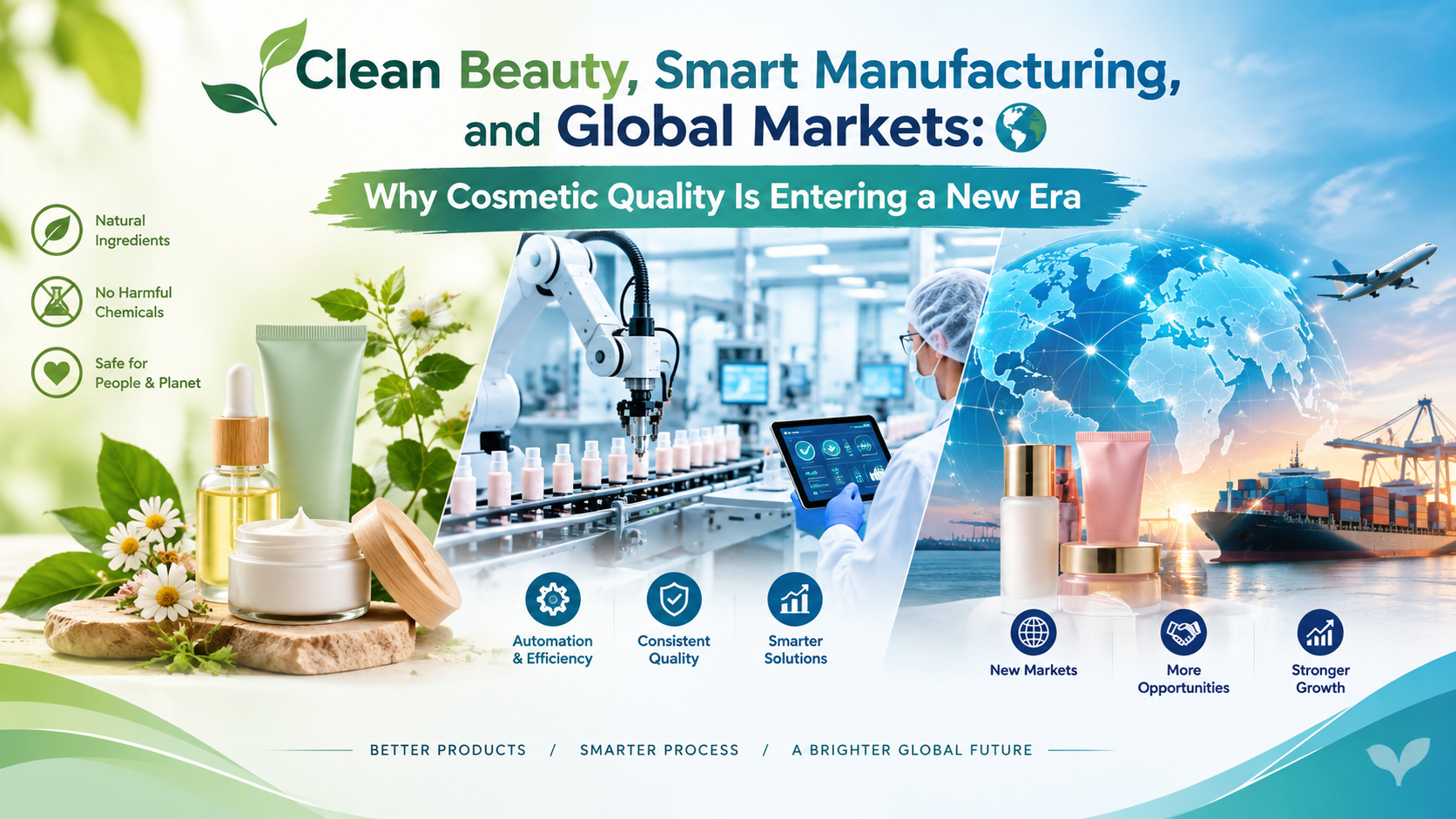
A decade ago, consumers often chose cosmetics based on fragrance, packaging, or celebrity endorsements. Today, purchasing decisions are influenced by a very different set of priorities. People want to know where ingredients come from, how products are manufactured, whether suppliers follow ethical practices, and if brands can genuinely support their claims of safety and sustainability.
This shift has transformed manufacturing. Cosmetic Quality is no longer viewed as a final inspection before products leave the factory. Instead, it has become an integral part of sourcing, formulation, production, packaging, and distribution.
At the same time, manufacturers are embracing automation, digital technologies, and data-driven decision-making to meet growing consumer expectations while expanding into increasingly competitive international markets. International Good Manufacturing Practices are becoming an important foundation for maintaining consistency, transparency, and product safety in this evolving environment.
Clean Beauty Is Raising the Standard for Manufacturing
The clean beauty movement has expanded far beyond products marketed as natural or organic. Consumers increasingly expect brands to demonstrate transparency throughout the manufacturing process, from responsible ingredient sourcing to hygienic production environments and reliable quality controls.
A product formulated with premium botanical ingredients can still fail to meet customer expectations if contamination occurs during production or manufacturing processes are inconsistent. As a result, cosmetic brands are investing more heavily in manufacturing systems that emphasize preventive quality rather than corrective action.
This shift reflects a broader industry trend where manufacturing discipline is becoming just as important as product formulation.
Ingredient Transparency Is Becoming a Competitive Advantage
Consumers today actively research cosmetic ingredients before making purchasing decisions. Mobile applications, QR codes, and online databases allow buyers to understand product composition within seconds.
This increased visibility has encouraged manufacturers to improve documentation, supplier management, and traceability. Companies are expected to know not only what ingredients are used but also where they originated, how they were stored, and how they were processed throughout production.
Manufacturers that can provide clear and reliable information are better positioned to strengthen customer confidence and differentiate themselves in crowded markets.
Smart Manufacturing Is Transforming Cosmetic Production
Digital transformation is changing the way cosmetic factories operate. Automation, connected equipment, and intelligent monitoring systems are helping manufacturers improve consistency while reducing operational risks.
Some of the most significant developments include:
AI-assisted visual inspection systems
IoT sensors that monitor temperature and humidity
Automated filling and packaging equipment
Electronic batch manufacturing records
Cloud-based quality documentation
Predictive equipment maintenance
Rather than replacing quality professionals, these technologies allow production teams to identify potential issues earlier, improve decision-making, and maintain greater consistency across manufacturing operations.
AI Is Moving Quality Management from Reactive to Predictive
Artificial intelligence is increasingly supporting Smart Manufacturing in Cosmetics by analyzing production data that would be difficult to evaluate manually.
Manufacturers are beginning to use AI to identify recurring quality trends, monitor equipment performance, forecast maintenance requirements, and analyze customer complaints. These insights allow organizations to prevent quality issues before they affect finished products.
Although human expertise remains essential, AI provides valuable support for faster and more informed quality decisions.
Sustainability Is Becoming Part of Product Quality
Sustainability is no longer viewed only as an environmental initiative. Increasingly, it is becoming part of how consumers evaluate product quality.
Manufacturers are reducing water consumption, improving energy efficiency, minimizing production waste, and selecting environmentally responsible packaging materials. These initiatives not only reduce environmental impact but also improve operational efficiency and strengthen brand reputation.
Organizations that integrate sustainable manufacturing with robust quality management are often better prepared to meet future regulatory and consumer expectations.
Global Expansion Requires Consistent Manufacturing Standards
International demand for cosmetics continues to grow through retail partnerships, contract manufacturing, and cross-border e-commerce.
However, expanding into overseas markets requires manufacturers to demonstrate consistent production practices, effective documentation, and reliable traceability. Internationally recognized Good Manufacturing Practices provide a structured framework for achieving these objectives while supporting confidence among distributors, retailers, and regulatory authorities.
For businesses seeking long-term international growth, quality management has become an important strategic investment rather than simply a compliance requirement.
Where ISO 22716 Fits into the Bigger Picture
This is where ISO 22716 becomes relevant—not as the centre of the conversation, but as one of the frameworks that supports modern Cosmetic Manufacturing.
By providing internationally recognized Good Manufacturing Practices, it helps manufacturers establish consistent production processes, strengthen hygiene controls, improve documentation, and enhance traceability across the supply chain.
When combined with digital technologies, sustainability initiatives, and a culture of continuous improvement, these practices help organizations deliver products that meet rising consumer expectations while supporting long-term business growth.
Conclusion
The cosmetics industry is entering an era where innovation, transparency, and manufacturing excellence are becoming inseparable. Consumers expect more than attractive packaging or marketing claims—they expect products backed by responsible sourcing, reliable manufacturing, and measurable quality.
Brands that invest in digital transformation, sustainable production, and internationally recognized manufacturing practices will be better positioned to adapt to changing regulations, strengthen customer trust, and compete in global markets.
The future of cosmetic quality will be defined not by a single trend but by the ability to combine innovation with consistent manufacturing excellence. Businesses that embrace this approach today will be well prepared for the next generation of cosmetic manufacturing.
Related Blog



6aa847276cd93.png)














































6a6350a4893cb.png)

6a606c6a4b011.jpg)









6a50e9b09fb4e.jpg)








6a2bcd56d8f33.jpg)
6a2c0d1d309d3.jpg)
6a211cc2a7dc0.png)

6a18313161c5a.jpg)














69cb4b7827b08.webp)















68ec9e22634a4.png)



























68edf1fee9090.jpg)














68f0a0f5a49dc.png)






















69dcdb1cbe702.jpg)