Why STEM Education Is Becoming a Strategic Priority for Schools in the UAE
The UAE is building a future shaped by innovation, technology, entrepreneurship, and advanced industries. From artificial intelligence and smart cities to aviation, sustainability, and space exploration, the country is creating new opportunities for the next generation. For schools, this means education must go beyond traditional classroom learning.
STEM education, which brings together science, technology, engineering, and mathematics, is becoming an important part of preparing students for this changing world. It helps students understand how ideas work in real life, develop problem-solving skills, and gain confidence using technology.
For school leaders, educators, and parents, STEM is no longer simply an additional activity. It is becoming a practical investment in future-ready learning.
The UAE’s Growing Focus on Future Skills
The UAE has made innovation and knowledge-based development central to its long-term vision. As industries continue to adopt automation, artificial intelligence, robotics, renewable energy, and digital systems, employers will increasingly look for people who can think critically, adapt quickly, and solve real problems.
Schools play a major role in developing these abilities early. Students who are exposed to hands-on learning can better understand how classroom concepts connect with the world around them.
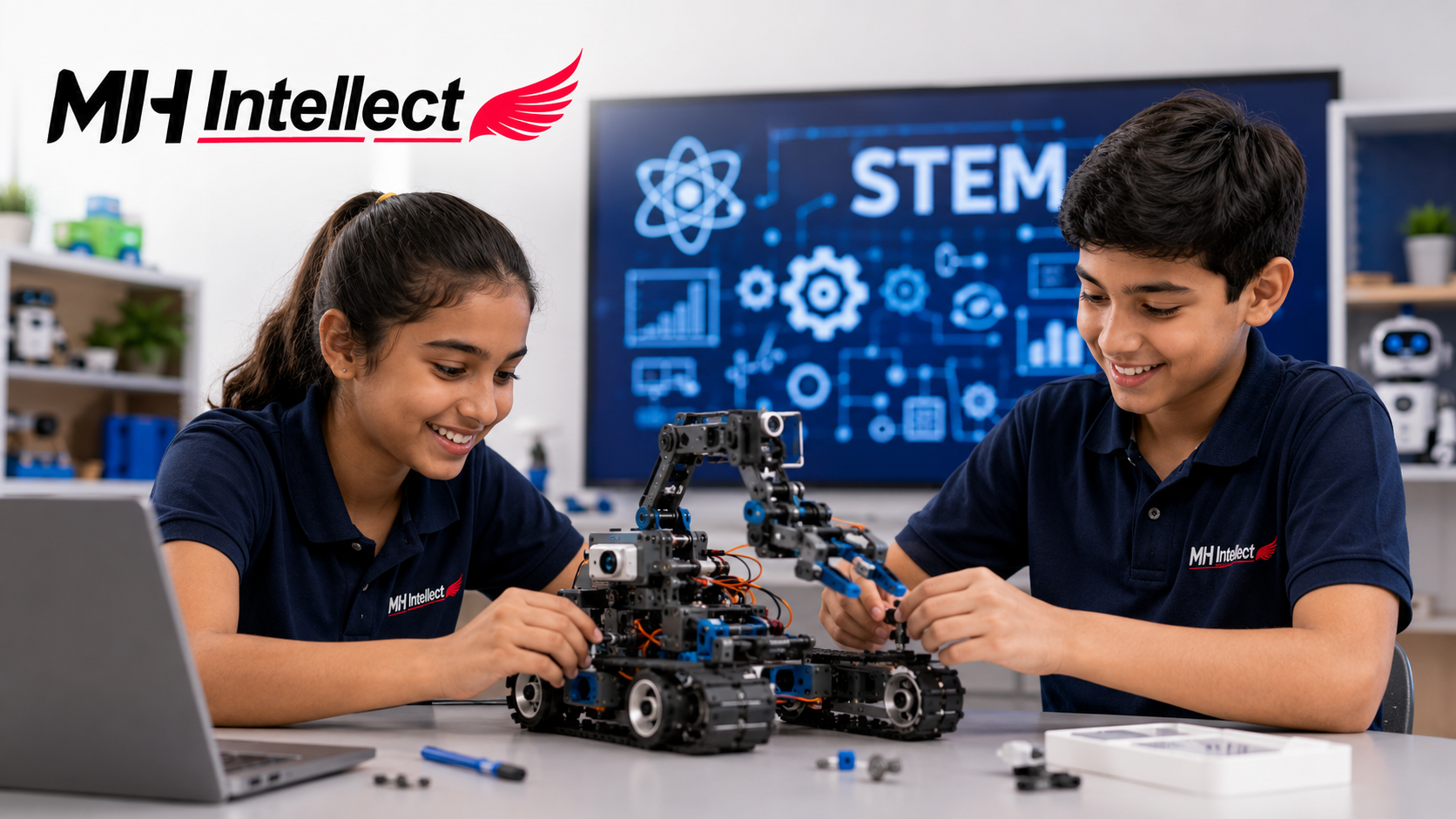
For example, instead of only learning about electricity from a textbook, students can build a simple circuit. Instead of only reading about coding, they can program a robot to complete a task. Instead of only discussing sustainability, they can create a smart farming model that uses sensors and automation.
These activities make learning more meaningful and encourage students to ask questions, test ideas, and improve their work.
STEM Learning Builds More Than Technical Knowledge
A strong STEM programme does not only teach students how to code or build robots. It develops a wider set of skills that are useful in every career path.
Students learn how to work in teams, communicate ideas, manage challenges, and think creatively. They also become more comfortable making mistakes and trying again, which is an important part of innovation.
Some of the key skills students can develop through STEM education include:
- Critical thinking and problem-solving
- Creativity and design thinking
- Collaboration and communication
- Digital literacy
- Research and analytical skills
- Confidence with technology
- Project planning and presentation skills
These skills are valuable not only for future engineers or programmers. They can support students who later choose careers in business, healthcare, architecture, design, aviation, education, and many other fields.
Why Hands-On Learning Makes a Difference
Students often understand difficult concepts better when they can see, build, test, and improve something themselves. Hands-on STEM learning gives students this opportunity.
A robotics project, for example, can teach programming, mechanics, mathematics, and teamwork at the same time. A drone activity can introduce students to aerodynamics, electronics, safety, and engineering design. A 3D printing project can help students turn an idea into a physical model.
This approach helps move learning from theory to application.
It also creates more engagement in the classroom. When students are involved in practical challenges, they are more likely to stay curious and participate actively. They begin to see science and technology as subjects they can use, not just subjects they need to study for exams.
STEM Programmes Support School Differentiation
For schools in the UAE, offering quality STEM programmes can also strengthen their academic positioning. Parents are increasingly interested in schools that provide practical learning opportunities, technology exposure, and future-focused skill development.
A well-planned STEM programme can support a school’s wider educational goals by adding meaningful activities to the curriculum. It can include robotics, coding, artificial intelligence, Internet of Things projects, drone learning, 3D printing, virtual reality, and innovation challenges.
The focus should not be on using technology only for appearance. The real value comes from creating structured learning experiences where students understand why a tool is used, how it works, and what problem it can solve.
Schools that introduce STEM in this way can create stronger learning outcomes while giving students opportunities to explore their interests.
Creating a Successful STEM Learning Environment
Introducing STEM education requires more than purchasing equipment. Schools need a clear plan that connects activities with student learning outcomes.
A successful programme usually includes age-appropriate tools, trained educators, project-based learning, safety guidance, and regular opportunities for students to present their work. Schools can begin with simple robotics and coding activities, then gradually introduce more advanced areas such as artificial intelligence, automation, aerospace, or smart agriculture.
It is also important to make STEM accessible to students with different interests and learning styles. Some students may enjoy coding, while others may be more interested in designing models, solving environmental problems, creating digital content, or leading project presentations.
The best STEM programmes create space for every student to contribute.
The Role of STEM Education Partners
Many schools work with specialist education partners to design and deliver structured STEM programmes. These partners can support schools with curriculum-aligned activities, educator training, STEM lab setup, learning kits, and practical workshops.
Choosing the right partner is important. Schools should look for programmes that focus on learning outcomes, not only products or demonstrations. The programme should be relevant to the age group, easy for teachers to implement, and flexible enough to support the school’s academic objectives.
For schools looking to introduce practical robotics, coding, AI, IoT, drone, and innovation-based learning, MH Intellect’s STEM education programmes provide structured solutions designed to help students explore technology through hands-on experiences.
Preparing Students for a Changing Future
The future workplace will continue to change as technology develops. Students will need more than subject knowledge to succeed. They will need curiosity, confidence, creativity, and the ability to solve unfamiliar problems.
STEM education gives students a foundation for these skills. It encourages them to become active learners who can explore ideas, work with others, and create solutions that matter.
For schools in the UAE, investing in STEM is an opportunity to prepare students not only for future careers, but also for a future where innovation will shape everyday life.
The students who learn to question, build, test, and improve today may become the innovators, entrepreneurs, engineers, and leaders who shape tomorrow.
Related Blog

6ab301e068635.jpg)













6aa847276cd93.png)








6a9fa7a209e73.jpg)






6a98551d6c9c3.png)

































6a7b248dbcf8b.jpeg)










6a6350a4893cb.png)

6a606c6a4b011.jpg)












6a50e9b09fb4e.jpg)














6a2bcd56d8f33.jpg)
6a2c0d1d309d3.jpg)

6a211cc2a7dc0.png)

6a18313161c5a.jpg)


























69cb4b7827b08.webp)














68ec9e22634a4.png)




























68edf1fee9090.jpg)















68f0a0f5a49dc.png)





















69dcdb1cbe702.jpg)