6acdefb0a58d8.jpeg)
How to Choose the Right Medical Equipment Supplier in the UAE
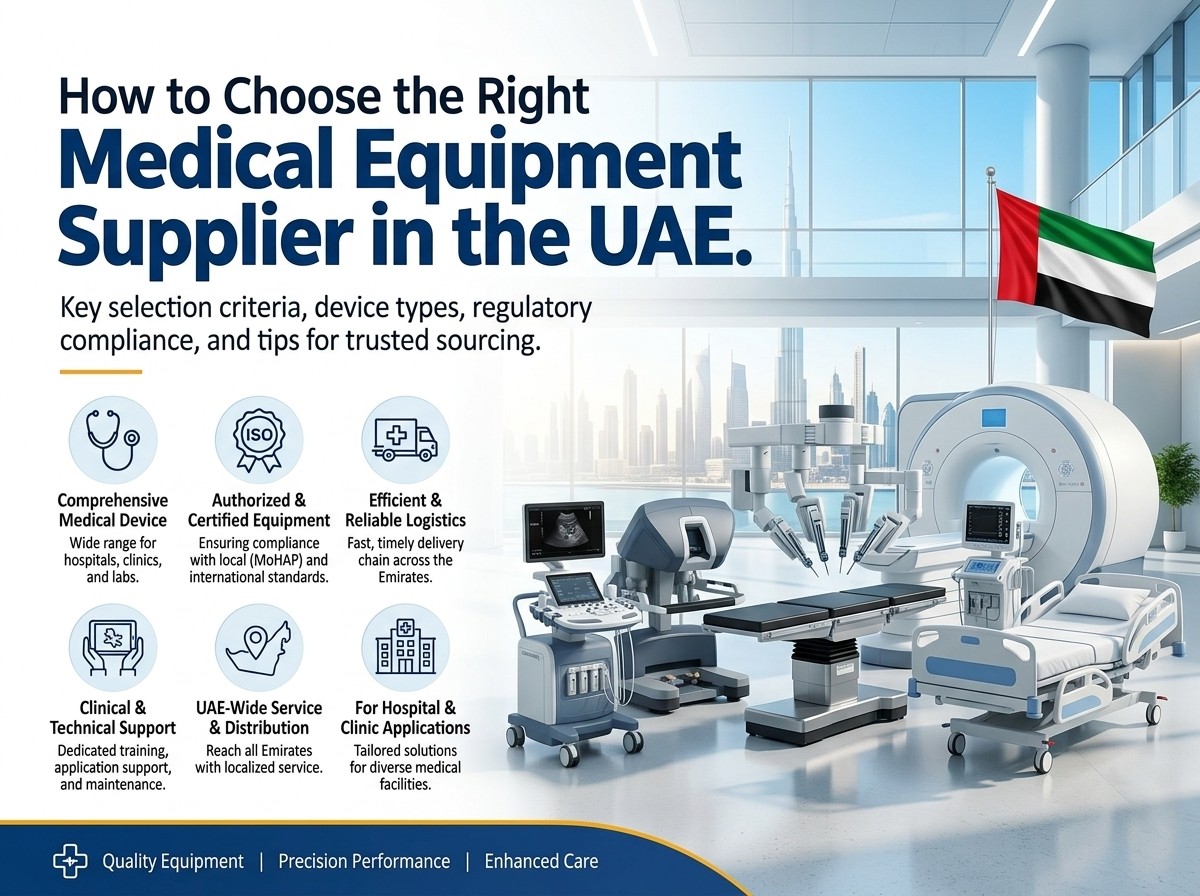
Healthcare facilities depend on reliable medical equipment for diagnosis, monitoring, treatment, rehabilitation, and day-to-day patient care. Whether it is a hospital, clinic, laboratory, diagnostic centre, or rehabilitation facility, choosing the right supplier can have a significant impact on equipment availability, operational efficiency, and long-term maintenance.
For healthcare organizations looking for dependable products and professional support, working with an experienced medical equipment supplier in UAE can make the procurement process more organized and efficient.
Understanding Your Healthcare Facility's Requirements
Before purchasing medical equipment, healthcare providers should first identify their actual requirements. Different departments and specialties require different types of equipment.
For example, a diagnostic centre may need medical imaging and laboratory equipment, while a dental clinic may require specialized dental systems and instruments. Hospitals may have broader requirements covering operation theatres, emergency departments, patient monitoring, medical furniture, and other areas.
A proper assessment should consider:
Type of healthcare facility
Medical specialties being provided
Number of patients
Available space
Equipment specifications
Required accessories and consumables
Installation requirements
Staff training
Maintenance and after-sales support
Understanding these factors can help healthcare organizations avoid unnecessary purchases and select equipment that matches their operational requirements.
Different Categories of Medical Equipment
Medical equipment covers a wide range of products and applications. A healthcare facility may require equipment for diagnosis, treatment, monitoring, rehabilitation, emergency care, or patient support.
Cardiology Equipment
Cardiology departments rely on equipment such as ECG machines, patient monitors, Holter monitoring systems, and other diagnostic devices. These products support healthcare professionals in monitoring and evaluating cardiovascular conditions.
Laboratory Equipment
Laboratories require accurate and dependable equipment for testing and analysis. Depending on the facility, requirements can include analyzers, centrifuges, microscopes, laboratory refrigerators, freezers, and other laboratory devices.
Medical Imaging Equipment
Imaging plays an important role in modern healthcare. Depending on the application, healthcare facilities may require ultrasound systems, X-ray equipment, CT-related solutions, endoscopy equipment, or other imaging products. Well Care's published product range includes ultrasound systems, C-arm equipment, CT scan equipment, X-ray systems, and endoscopy products. (Medical Imaging Equipment)
Operation Theatre Equipment
Operation theatres require specialized equipment to support surgical procedures and patient monitoring. Depending on the facility, this can include operating tables, surgical equipment, infusion pumps, ventilators, patient monitors, and other operating-room solutions.
Physiotherapy and Rehabilitation Equipment
Physiotherapy equipment supports rehabilitation and recovery programs. Clinics and rehabilitation centres may require equipment designed for physical therapy, mobility training, and other rehabilitation applications.
Medical Furniture
Medical furniture is another important part of healthcare infrastructure. Hospital beds, examination tables, medical trolleys, patient chairs, and related furniture need to be practical, durable, and suitable for the healthcare environment.
Why Supplier Support Matters
Purchasing medical equipment is not simply about finding a product and completing a transaction. Healthcare providers also need to consider installation, training, maintenance, spare parts, and technical assistance.
A supplier that provides support beyond the initial sale can make equipment procurement and ownership easier for healthcare facilities.
Well Care Medical Equipment states that its services include sales and consultation, installation and training, maintenance and support, equipment upgrades, and equipment rental.
This type of support can be particularly useful for facilities introducing new equipment or upgrading existing departments.
Checking Product Quality and Documentation
Healthcare organizations should carefully review product specifications and documentation before purchasing medical equipment. Depending on the type of device, relevant regulatory requirements, certifications, manufacturer information, warranty terms, and technical documentation may need to be checked.
It is also important to understand how the equipment will be installed, operated, calibrated, maintained, and serviced.
For specialized equipment, healthcare providers should ask suppliers about:
Manufacturer and model
Technical specifications
Warranty coverage
Installation requirements
Training availability
Maintenance arrangements
Spare parts availability
Delivery timelines
Regulatory documentation
These checks can help organizations make informed procurement decisions.
Medical Equipment Supply Across the UAE
Healthcare facilities across the UAE have different procurement requirements. A supplier serving multiple locations can help organizations coordinate equipment sourcing and delivery according to their project requirements.
Well Care Medical Equipment is based in Dubai and states that it serves healthcare facilities across the UAE, including hospitals, clinics, laboratories, diagnostic centres, rehabilitation facilities, pharmacies, and home healthcare providers.
For organizations operating in different emirates, it is useful to discuss delivery, installation, and after-sales support before placing an order.
Buying Medical Equipment for a New Clinic
Setting up a new clinic requires careful planning because equipment requirements can vary significantly by specialty.
A general clinic may require examination furniture, patient monitoring devices, diagnostic equipment, medical consumables, and basic clinical instruments. A specialized facility may require more advanced equipment.
Instead of purchasing products individually without a clear plan, clinic owners can prepare an equipment list based on each department and discuss the requirements with a professional supplier.
This approach can help identify compatible equipment, accessories, installation requirements, and potential maintenance needs before the purchase is finalized.
Upgrading Existing Healthcare Equipment
Healthcare facilities do not always need to replace every piece of equipment when upgrading their operations. In some cases, selected equipment can be upgraded or replaced based on age, performance, technology, maintenance costs, and clinical requirements.
Well Care also provides equipment upgrade services, helping healthcare facilities evaluate their existing equipment and consider suitable upgrade options.
The decision should be based on the equipment's condition, expected lifespan, availability of spare parts, operational requirements, and the cost of continued maintenance.
Choosing a Medical Equipment Partner
A reliable medical equipment partner should be able to understand the requirements of healthcare professionals and provide appropriate product information and support.
When comparing suppliers, healthcare organizations can consider:
Product range – Does the supplier cover the categories required by the facility?
Product specifications – Are complete technical details available?
Installation and training – Is support available after delivery?
Maintenance – Can the supplier provide ongoing technical assistance?
Warranty – Are warranty conditions clearly explained?
Availability – Can the required products be supplied within the project timeline?
Consultation – Can the supplier help identify suitable solutions?
After-sales service – Is support available after the purchase?
These factors can be more important than comparing equipment prices alone.
Well Care Medical Equipment in the UAE
Well Care Medical Equipment provides a broad selection of healthcare products for hospitals, clinics, laboratories, diagnostic centres, rehabilitation facilities, and other healthcare organizations. Its published product categories include cardiology, dental, ENT, gynecology, laboratory, medical imaging, operation theatre, ophthalmology, physiotherapy, emergency equipment, medical furniture, consumables, and home healthcare equipment.
Healthcare organizations looking for equipment can review the available categories and discuss their specific requirements with the supplier before making a purchase.
You can also explore medical devices and healthcare solutions from Well Care to understand the broader range of products and services available.
Conclusion
Selecting medical equipment is an important decision for hospitals, clinics, laboratories, and other healthcare facilities. The right approach involves more than comparing prices. Product specifications, quality, documentation, installation, training, maintenance, warranty, and after-sales support should all be considered.
By working with an experienced medical equipment supplier in UAE, healthcare organizations can simplify equipment sourcing and identify solutions that are appropriate for their specific facility and operational requirements.
For healthcare providers planning a new facility, expanding an existing department, or replacing outdated equipment, professional consultation can help make the procurement process more structured and efficient.
Related Blog


















6ab301e068635.jpg)














6aa847276cd93.png)









6a9fa7a209e73.jpg)



6a98551d6c9c3.png)


































6a7b248dbcf8b.jpeg)










6a6350a4893cb.png)

6a606c6a4b011.jpg)












6a50e9b09fb4e.jpg)










6a2bcd56d8f33.jpg)
6a2c0d1d309d3.jpg)

6a211cc2a7dc0.png)

6a18313161c5a.jpg)



























69cb4b7827b08.webp)




























694fa33ac18ea.jpeg)




693e715695a8f.png)


693923523a9ac.png)








68ec9e22634a4.png)






















68edf1fee9090.jpg)















68f0a0f5a49dc.png)





















69dcdb1cbe702.jpg)