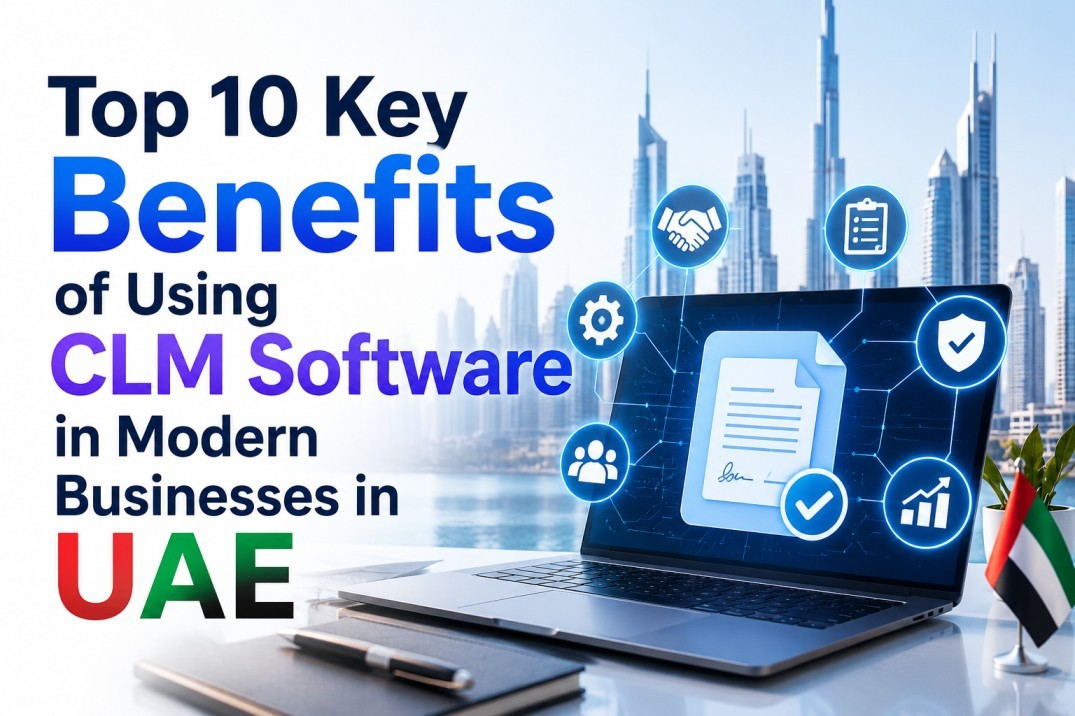
Top Benefits of Implementing Contract Lifecycle Management Software in Businesses in UAE

Ask any operations manager in UAE how their company handles contracts, and you'll probably hear some version of the same story-folders scattered across different drives, three versions of the same NDA floating around in email threads, and someone scrambling to find a signed copy right before a renewal deadline. It's a familiar headache, and it's one that's pushing more UAE companies toward proper contract management tools.
Contract lifecycle management in UAE has moved from being a "nice to have" to something businesses actually budget for, and the shift makes sense once you look at how contracts touch nearly every part of a company: vendors, clients, employees, landlords, and government entities. When that paperwork is messy, the costs show up in missed renewals, slow approvals, and contracts that quietly favour the other side because nobody caught the fine print in time.
So what actually changes once a business puts CLM software to work? Quite a lot, honestly.
1. Contracts stop disappearing into the void
This is usually the first thing people notice. Once contracts live in one place instead of being scattered across inboxes and desktop folders, nobody has to ask "does anyone have the latest version of this?" in a group chat. Every draft, redline, and signed copy sits in a single, searchable record. For a company juggling free zone agreements, mainland licenses, and supplier contracts across different emirates, that alone saves hours every week.
2. Approvals don't take forever anymore
Anyone who's waited a week for a manager to "get around to" approving a contract knows how much that slows a deal down. CLM platforms route documents automatically to the right person, send reminders when something's been sitting too long, and let teams approve from a phone if needed. Deals that used to take ten days to close can sometimes wrap up in two or three.
3. Renewals and deadlines actually get tracked
UAE businesses deal with a lot of recurring contracts leases, service agreements, employment contracts and supplier deals and missing a renewal date can be expensive. Auto-renewal clauses have a way of locking companies into terms nobody actually reviewed. Good CLM software flags these dates well in advance, so legal or procurement teams are alerted instead of receiving a surprise invoice.
4. Compliance gets a lot less stressful
Businesses in the UAE can't really afford to be loose with their contract terms, given the VAT obligations, Economic Substance Regulations, and the general push toward stricter corporate governance. CLM tools usually come with built-in templates and clause libraries already approved by legal, which cuts down on the risk of someone using an outdated template or skipping a mandatory clause. When auditors or regulators come asking questions, having a clean digital trail makes that conversation a lot shorter.
5. Negotiations move faster, and contracts end up tighter
Redlining a contract over email is painful; version control alone can eat up half a day. With CLM software, both sides can comment, suggest changes, and track edits in real time, which means contracts get finalised faster and with fewer "wait, which version are we even on?" moments. Some platforms also automatically flag risky clauses, which is genuinely useful when a legal team is stretched thin — and most are.
6. Costs actually go down
It sounds a bit backwards to spend money on software to save money, but the math tends to work out. Less time spent searching for documents, fewer missed renewals, fewer disputes over unclear term, it all adds up. A number of UAE-based companies have reported cutting contract-related admin work by a third or more after moving away from manual processes, mostly because nobody's manually chasing signatures around the office anymore.
7. Teams across locations stay on the same page
A lot of UAE businesses operate across multiple emirates, or have remote staff working outside the country entirely. CLM software keeps everyone — legal, sales, finance, procurement — looking at the same contract data instead of working off an outdated copy someone forwarded three weeks ago. There's something to be said for everyone simply seeing the same version of the truth.
8. It builds a paper trail that actually holds up
Disputes happen, even with reliable partners. When a disagreement over delivery dates or payment terms comes up, having a timestamped history of who approved what and when makes resolving it far less painful. Instead of digging through old emails trying to reconstruct what was agreed, the full history is right there.
None of this means CLM software is magic. It still needs proper setup, and someone on the team has to actually use it consistently for any of these benefits to show up. But for UAE businesses dealing with growing contract volumes and tighter regulatory expectations, moving away from spreadsheets and scattered email chains isn't really optional anymore, it's just become how contracts get managed.
Related Blog




6aa847276cd93.png)





































6a6350a4893cb.png)

6a606c6a4b011.jpg)









6a50e9b09fb4e.jpg)








6a2bcd56d8f33.jpg)
6a2c0d1d309d3.jpg)
6a211cc2a7dc0.png)

6a18313161c5a.jpg)












69cb4b7827b08.webp)















68ec9e22634a4.png)



























68edf1fee9090.jpg)

















68f0a0f5a49dc.png)






















69dcdb1cbe702.jpg)