6acdefb0a58d8.jpeg)
How Professional Website Development Helps Small Businesses Grow in the UAE
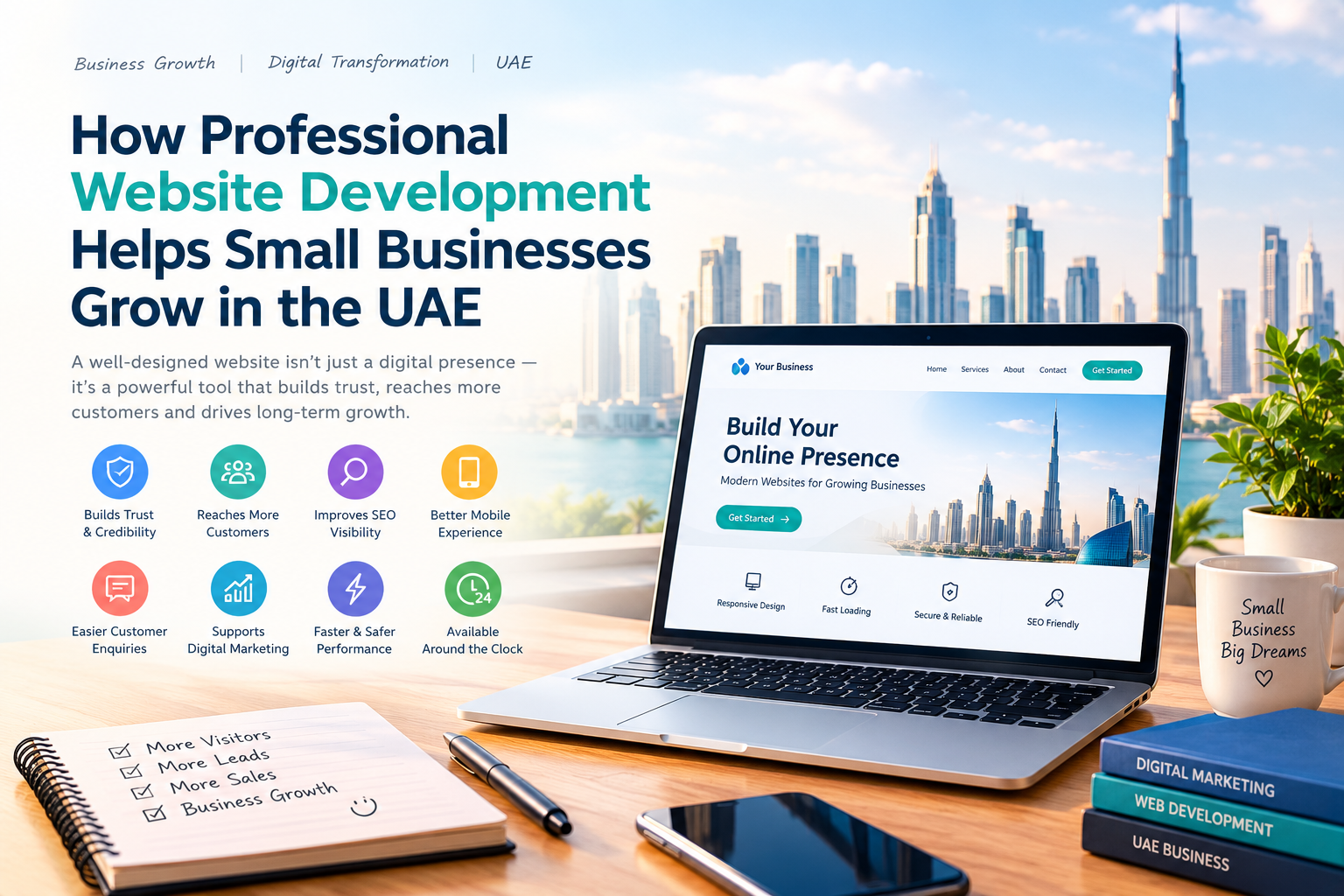
How Professional Website Development Helps Small Businesses Grow in the UAE
Introduction
The United Arab Emirates (UAE) has a growing business environment where companies use digital technology to reach customers and improve their services. From small retail shops in Dubai to service providers in Abu Dhabi and other emirates, having a professional website can help businesses build trust and reach a wider audience.
Today, customers often search online before choosing a product or service. A business that has a useful, professional website can make it easier for customers to understand its offerings, contact the company, and make informed decisions.
1. Builds Trust and Credibility
A professional website creates a strong first impression. Customers want to know whether a business is reliable before purchasing a product or contacting a service provider.
A website with clear information, professional design, contact details, and customer testimonials can help establish credibility. Businesses should include their services, location, working hours, and other relevant details so visitors can easily understand what they offer.
Keeping website information accurate and updated also helps customers feel more confident when dealing with a company.
2. Reaches More Customers
A physical shop or office mainly serves customers who know its location. A website gives businesses an opportunity to reach people searching online across different locations.
For example, a cleaning company in Dubai can explain its services, service areas, and booking process on its website. Similarly, a small consulting firm can use its website to introduce its expertise and receive enquiries from potential clients.
A website that provides useful information can help a business attract customers beyond its immediate neighbourhood.
3. Improves Search Engine Visibility
Search engine optimisation, commonly called SEO, helps websites appear in relevant search results. When people search for products or services, businesses want their websites to be easy to discover.
Basic SEO practices include using relevant keywords, writing helpful page titles and descriptions, organising content with headings, and making pages easy for search engines to understand.
Local businesses can also provide consistent business information online and maintain their business profiles. These steps may improve their chances of appearing for relevant local searches, although search rankings are never guaranteed.
4. Provides a Better Mobile Experience
Many customers browse websites using smartphones. A website should therefore work well on different screen sizes, including mobile phones, tablets, and desktop computers.
Responsive design automatically adjusts page layouts to fit different devices. Text should be readable, buttons should be easy to tap, and contact information should be simple to find.
A mobile-friendly website makes it easier for customers to explore services, submit enquiries, and take the next step without unnecessary difficulty.
5. Makes Customer Enquiries Easier
A website can act as a communication channel between a business and its customers. Contact forms, click-to-call buttons, email links, and messaging options can make it easier for visitors to ask questions.
Businesses can also provide answers to common questions about pricing, delivery, service areas, and working hours. This saves time for both customers and staff.
For companies that accept appointments or bookings, suitable online booking tools can make the process more convenient.
6. Supports Digital Marketing
A professional website can serve as the central destination for digital marketing activities. Businesses can direct visitors from social media posts, email campaigns, online advertisements, and search engine results to relevant website pages.
For example, a restaurant can promote its menu and reservation options, while a training institute can explain its courses and provide an enquiry form.
Tracking website visits, enquiry submissions, and other useful metrics helps businesses understand which marketing activities are generating results. Companies can then make improvements based on actual performance rather than assumptions.
7. Improves Website Speed and Security
Website performance affects the user experience. Slow pages may frustrate visitors, particularly when they are browsing on mobile networks.
Businesses should use optimised images, reliable hosting, efficient website code, and appropriate caching techniques to improve loading speed. Regular maintenance is also important to keep software and website components up to date.
Security matters as well. HTTPS encryption, secure forms, regular backups, and suitable access controls can help protect websites and customer information.
8. Makes Business Information Available Around the Clock
Unlike a physical office, a website can provide information at any time of day. Customers can learn about a company's services, review its portfolio, check frequently asked questions, and submit enquiries outside normal working hours.
Although staff may not respond immediately, the website can collect enquiries for follow-up later. This is particularly useful for small businesses that need to manage customer communication efficiently.
9. Helps Businesses Present Their Brand
A website allows a company to communicate its identity through consistent colours, typography, images, messaging, and content.
Businesses can showcase completed projects, explain their experience, introduce their team, and share customer feedback where appropriate. This helps potential customers understand what makes the business different.
A clear and consistent brand presentation can support customer recognition across the website and other digital channels.
10. Choosing the Right Website Development Approach
Before creating a website, business owners should identify their main goals. Some companies need a simple informational website, while others may require an online store, appointment booking, customer portals, or integrations with existing business software.
The choice of technology should depend on the business's needs, budget, expected traffic, maintenance requirements, and future plans.
Businesses exploring professional website development services can review providers such as Nestsoft to learn about available digital solutions and determine whether they suit their requirements.
It is also important to discuss project timelines, ongoing maintenance, security, mobile responsiveness, and the ability to update website content.
Conclusion
A professional website can help small businesses in the UAE establish credibility, reach more customers, improve online visibility, and communicate their services effectively. When combined with useful content, good SEO practices, mobile-friendly design, and reliable security, a website can become an important part of a company's digital strategy.
Business owners should begin by understanding their customers and defining clear objectives. By investing in a website that meets those needs and maintaining it regularly, small businesses can create a stronger online presence and provide a better experience for their customers.
Related Blog



















6ab301e068635.jpg)
















6aa847276cd93.png)










6a9fa7a209e73.jpg)






6a98551d6c9c3.png)








































6a7b248dbcf8b.jpeg)











6a6350a4893cb.png)

6a606c6a4b011.jpg)












6a50e9b09fb4e.jpg)

















6a2bcd56d8f33.jpg)
6a2c0d1d309d3.jpg)

6a211cc2a7dc0.png)

6a18313161c5a.jpg)






























69cb4b7827b08.webp)





























694fa33ac18ea.jpeg)







693e715695a8f.png)


693923523a9ac.png)








68ec9e22634a4.png)




























68edf1fee9090.jpg)
















68f0a0f5a49dc.png)




















69dcdb1cbe702.jpg)