
Why Is MEP Design Important in Dubai Building Projects?
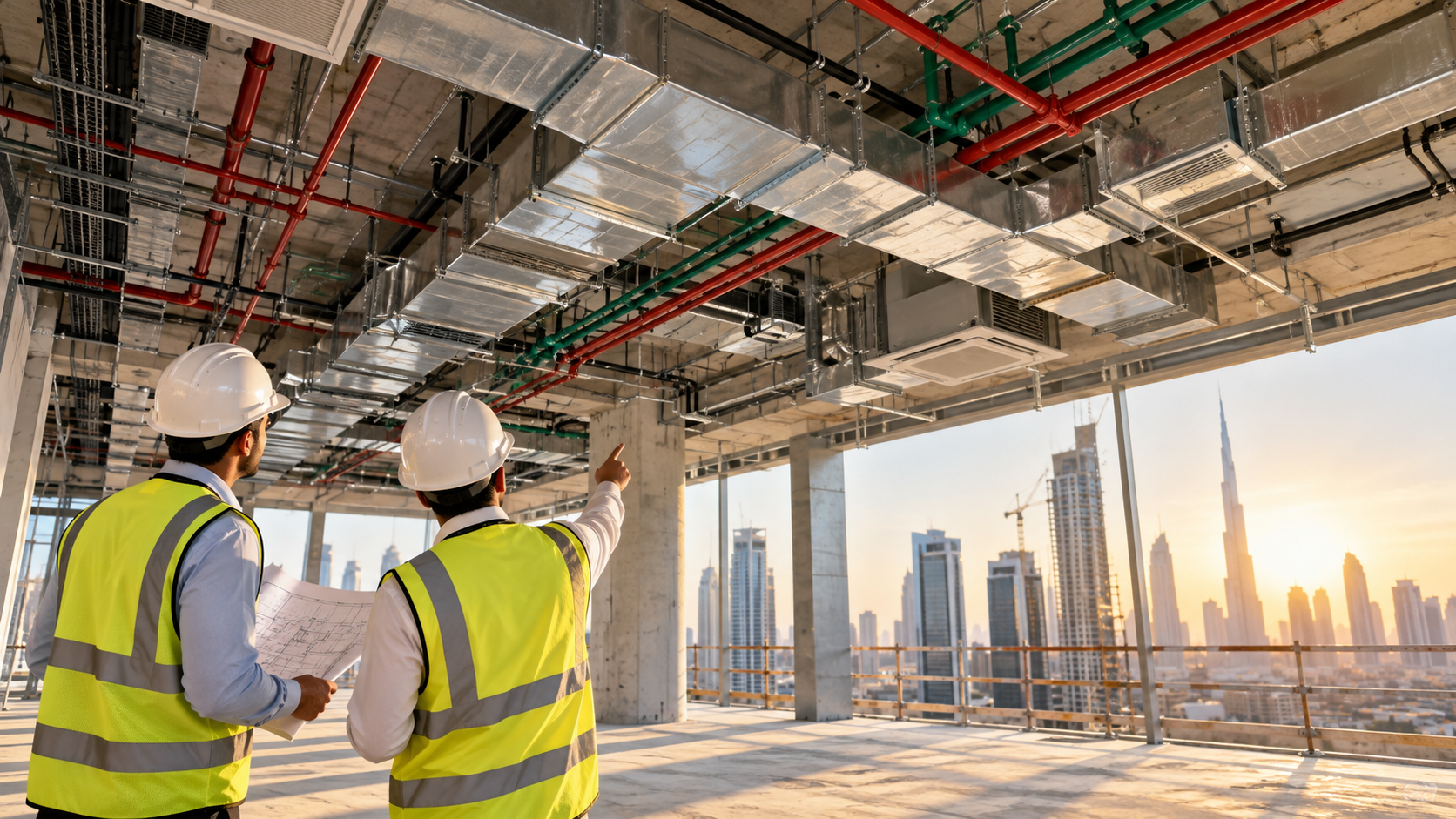
Most people judge a building by what they can see: the facade, the layout, and the finishes. Yet the comfort of a space depends just as much on what stays hidden behind walls and ceilings. Cool air that reaches every room, lights that switch on when needed, water that flows at the right pressure and fire alarms that respond in an emergency all come from the mechanical, electrical and plumbing systems, known together as MEP. In a city with extreme summer heat and strict safety rules, getting this design right is not optional. This article explains why MEP design matters so much in Dubai, what it covers and how it affects cost, comfort and approvals.
What Does MEP Design Include?
MEP stands for mechanical, electrical and plumbing systems. Each part covers a different set of systems:
- Mechanical: air conditioning and ventilation (HVAC), chilled water systems, exhaust, smoke control and, in many buildings, building management controls.
- Electrical: power distribution, lighting, emergency power, earthing and lightning protection, and low-current systems such as data, CCTV and access control.
- Plumbing and fire: domestic water supply, drainage, hot water, rainwater and stormwater, plus firefighting and fire alarm systems.
Experienced MEP engineering consultants in Dubai design these systems as one coordinated package. They calculate loads, size equipment, route services through the building and prepare the drawings, schedules and specifications needed for approvals and construction. The result is a building that works properly from the day it opens, not one that needs fixing after handover.
Why MEP Design Matters So Much in Dubai
Cooling is the biggest demand. Dubai's long, hot summers mean air conditioning runs for much of the year. In many buildings, cooling accounts for a large share of total energy use, so the choice of system, equipment efficiency and insulation has a direct effect on running costs for the life of the building.
Safety rules are strict. Fire and life safety design must meet local requirements and be approved by the relevant authorities before construction. Systems such as sprinklers, alarms, smoke extraction and emergency lighting need careful design, not guesswork.
Utility connections need planning. Power and water connections depend on accurate load calculations. Underestimated loads can cause delays or redesign when utility providers review the submission.
Sustainability expectations are rising. Dubai has green building requirements that encourage efficient cooling, lighting and water use. Good MEP design is one of the most practical ways for a project to meet those expectations.
Buildings are complex. Towers, malls, hospitals, hotels and even large villas contain extensive systems. The bigger and more complex the building, the more a single design mistake can multiply into expensive consequences.
How MEP Design Affects Cost, Comfort and Performance
Running costs
Construction cost is only part of the picture. Over the life of a building, energy and maintenance often cost far more than the original installation. A well-designed system matches equipment size to the actual load, avoids unnecessary oversizing and makes maintenance easier. Poor design can lead to higher electricity bills, uneven cooling and frequent breakdowns.
Comfort and indoor quality
Occupants notice MEP quality every day. Rooms that are too hot or too cold, noisy ventilation, poor lighting levels or low water pressure are all signs of design problems. Proper ventilation and air distribution also support healthier indoor air, which is important for offices, schools and homes alike.
Reliability
Critical buildings, such as hospitals, data centres and hotels, rely on backup power, redundancy and resilient systems. Designing these properly from the start avoids service interruptions later.
Coordination With Architecture and Structure
MEP systems need space. Ducts, pipes, cable trays, risers, plant rooms and equipment must fit within ceilings, shafts and structure without clashing with beams, columns or architectural features. When this process is not planned early, the usual outcome is clashes discovered on site, which means delays, rework and arguments between contractors.
This scenario is why working with architectural and engineering consultants in Dubai who coordinate design disciplines under one team can be valuable. When architects, structural engineers and MEP engineers share information from the early design stages, ceiling heights, shaft sizes and plant room locations can be agreed before drawings are finalised. Many projects now use 3D coordination models to find clashes digitally, long before materials are ordered.
The Role of MEP Design in Approvals
MEP drawings form a major part of any building permit and completion process. Reviews typically cover fire protection, electrical safety, plumbing and drainage, and in some cases energy and green building compliance. Incomplete or inconsistent drawings are a common reason for review comments and resubmissions.
A consultant who understands what the authorities expect can prepare drawings and calculations in the right format, helping avoid avoidable back-and-forth. Requirements differ by building type, size and location, so it is always sensible to confirm the current rules for a specific project before design begins.
Why MEP Supervision Does Not Stop at Design
Even the best design only works if it is installed correctly. During construction, contractors install thousands of metres of pipes, ducts and cables, often in tight spaces and under time pressure. Checking that installations match approved drawings, that materials meet specifications and that testing and commissioning are done properly is just as important as the design itself.
This is where MEP supervision consultants in UAE play their part. They inspect work on site, review contractor submissions and witness tests, so they can find and correct problems while they are still easy to fix. Testing and commissioning at the end confirm that systems perform as designed and that fire safety systems are ready for inspection.
Common MEP Mistakes and How to Avoid Them
Several recurring issues affect projects of all sizes:
- Appointing MEP engineers too late. If layouts are fixed before services are considered, there may be no space left for properly sized ducts and risers.
- Oversizing equipment "to be safe". Larger equipment costs more, uses more energy and can perform poorly at part load.
- Ignoring maintenance access. Equipment placed where it cannot be reached becomes expensive to service.
- Weak coordination between disciplines. Unresolved clashes turn into site variations and delays.
- Skipping proper testing. Commissioning is not a formality. It is the proof that the systems actually work.
What to Look for in an MEP Consultant
When comparing options, a few points help separate strong teams from weak ones. Check registration and familiarity with the relevant Dubai authorities, experience with buildings similar in size and use, the ability to coordinate with other design teams, and a clear written scope. Lists of top MEP companies in Dubai can be a starting point, but client references and completed projects give a more reliable picture than rankings alone.
Final Thoughts
MEP design shapes how a building feels, performs and costs to run long after construction ends. In Dubai, where cooling demand is high and safety standards are strict, it deserves attention from the start of a project rather than as an afterthought. Early appointment, coordination with other disciplines, proper approvals and careful site supervision together make the difference between a building that simply stands and one that works well every day.
Anyone planning a villa, office or commercial development can benefit from reliable MEP consultancy services at the planning stage. Contact a qualified consultant to discuss your project and the MEP support it needs.
Related Blog















6ad6096d44d50.jpg)

6ad1c7874e895.png)

6acdefb0a58d8.jpeg)







6ab301e068635.jpg)







6aa847276cd93.png)





6a9fa7a209e73.jpg)


6a98551d6c9c3.png)























6a7b248dbcf8b.jpeg)





6a6350a4893cb.png)
6a606c6a4b011.jpg)






6a50e9b09fb4e.jpg)





6a2bcd56d8f33.jpg)
6a2c0d1d309d3.jpg)
6a211cc2a7dc0.png)

6a18313161c5a.jpg)














69cb4b7827b08.webp)

















694fa33ac18ea.jpeg)


693e715695a8f.png)


693923523a9ac.png)


68ec9e22634a4.png)













68edf1fee9090.jpg)









68f0a0f5a49dc.png)











69dcdb1cbe702.jpg)
6aed985f6b5b8.webp)