6b09591d77311.png)
How Recruitment Agencies Help Businesses Find Qualified Professionals
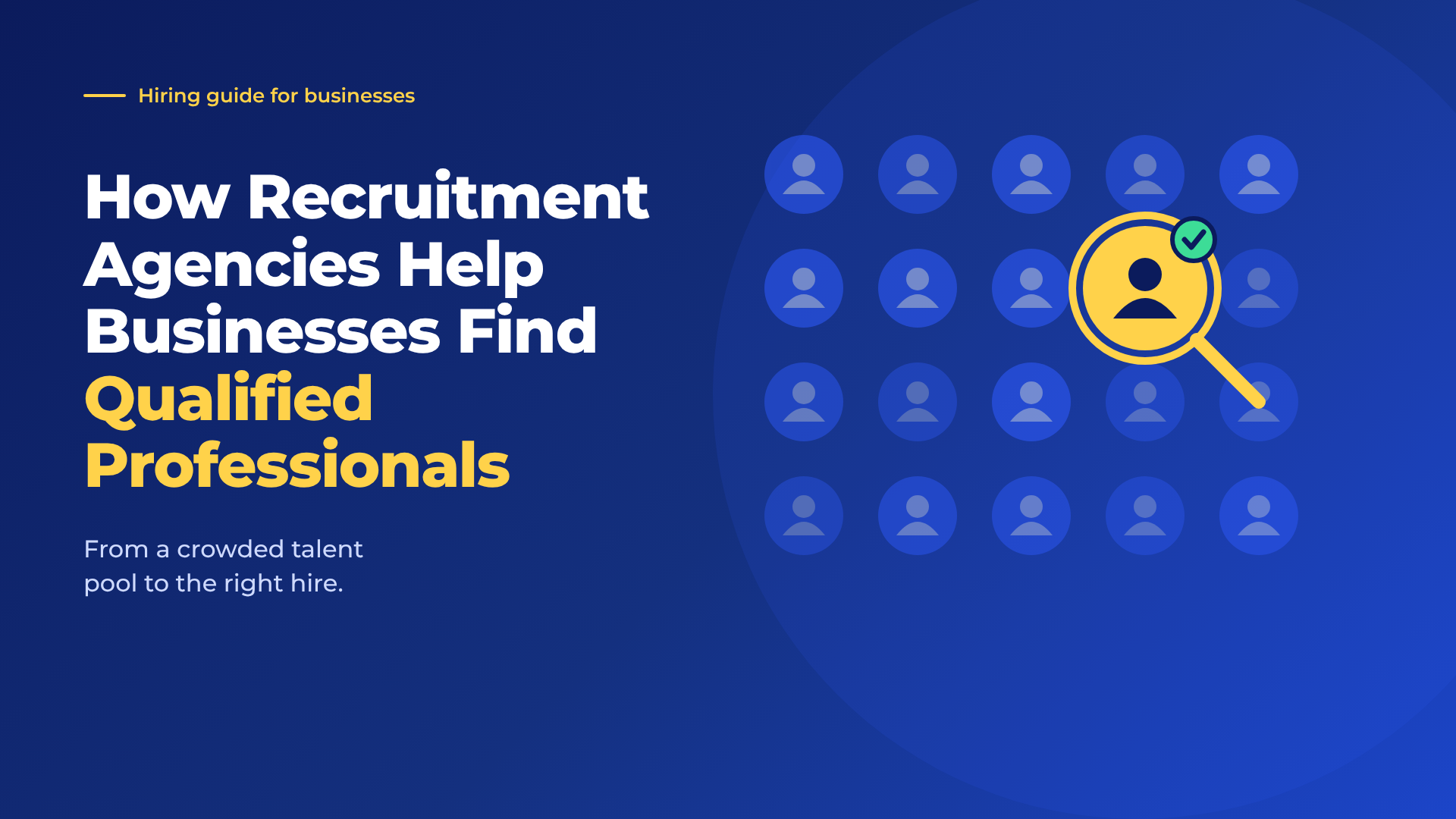
Manpower continues to play an important role across industries, regardless of how rapidly technology and artificial intelligence are changing the workplace. While automation can handle repetitive tasks, analyze information, and support business operations, organizations still depend on people to make decisions, manage complex processes, solve problems, and bring specialized knowledge to their work. From construction and healthcare to finance, manufacturing and information technology, the demand for qualified professionals remains an important part of business growth.
However, finding people with the right qualifications, practical experience, and professional capabilities can be challenging. Businesses must consider more than the number of applicants they receive. They need professionals who understand their responsibilities and can contribute to specific operational requirements. Agencies who provide recruitment services in Dubai help address this challenge by connecting employers with suitable candidates and supporting different stages of the hiring process.
Understanding How Recruitment Agencies Approach Talent Acquisition
Recruitment involves several activities beyond advertising vacancies and collecting applications. Agencies begin by understanding the organization's workforce requirements, including job responsibilities, technical qualifications, experience levels, and expected salary ranges. Based on these requirements, recruiters identify potential candidates through professional networks, existing talent databases, industry contacts, and targeted sourcing methods. They may also approach professionals who are currently employed but open to considering suitable career opportunities. This process helps businesses reach candidates who might not respond to conventional job advertisements. It also gives recruiters a clearer understanding of the professional background and capabilities required for each position.
Identifying Professionals with Industry-Specific Skills
The qualifications and experience required for a position can vary considerably between industries. A construction company recruiting a project engineer, for example, may prioritize technical knowledge, project execution experience, and familiarity with construction practices. A financial institution searching for a compliance professional will have different expectations. Recruitment agencies consider these differences when identifying and evaluating candidates. Their industry knowledge can help businesses assess professionals based on relevant competencies rather than relying solely on job titles or years of experience. Here’s what agencies that provide recruitment services in Dubai focus on selecting candidates across different industries:
Healthcare: Medical qualifications, professional licensing, clinical experience, and familiarity with healthcare procedures are important when recruiting doctors, nurses, and other medical professionals.
Information Technology: Software development, cybersecurity, cloud computing, and data analysis positions require candidates with relevant technical knowledge and practical project experience.
Construction and Engineering: Employers may require civil engineers, project managers, site supervisors, and technical specialists with experience in specific project types and construction environments.
Finance and Banking: Recruitment for financial positions often involves evaluating knowledge of accounting, financial reporting, risk management, and regulatory requirements.
Understanding these differences helps recruiters identify candidates whose experience corresponds with the actual requirements of a position.
Candidate Screening and Professional Assessment
Receiving a large number of applications does not necessarily mean a business will find the right employee. Candidates may have similar qualifications but differ considerably in their practical knowledge, communication abilities, and suitability for a particular role. Recruitment agencies support the selection process through several assessment activities, depending on the position and the agreed scope of services. These may include reviewing educational qualifications, examining previous employment records, conducting preliminary interviews, assessing technical competencies, and checking professional references.
For specialized positions, additional verification may be necessary. For instance, healthcare employers may need to examine relevant professional licenses, while engineering companies may look for experience with particular equipment, software, or project environments. The shortlisted candidates are then presented to employers for further evaluation. This gives hiring managers a more focused selection of applicants and allows them to concentrate on interviews and final hiring decisions.
Recruitment Solutions for Different Workforce Requirements
Not every business has the same hiring needs. An established organization recruiting a senior department head will have different requirements from a company preparing to launch a new project or expand its operational team. Recruitment agencies can support several types of hiring arrangements:
Permanent Recruitment: Suitable for businesses looking to fill long-term positions across operational, technical, administrative, and management departments.
Contract Staffing: Helps organizations recruit professionals for specific projects, temporary requirements, or defined periods of work.
Executive Search: Involves identifying experienced senior professionals and leadership candidates for positions that require particular industry knowledge and management capabilities.
Bulk Recruitment: Supports businesses that need to recruit several employees within a particular timeframe, such as during business expansion or new project mobilization.
Having access to different recruitment arrangements allows businesses to consider their immediate staffing requirements alongside longer-term workforce plans.
Recruitment Services in Dubai: Understanding the Local Employment Market
Dubai's employment market brings together professionals from different nationalities, educational backgrounds, and industries. This creates opportunities for businesses to recruit internationally, but it also means employers must carefully evaluate qualifications, professional experience, and employment requirements. Companies seeking recruitment services in Dubai may need assistance with sourcing candidates from international markets, understanding prevailing salary expectations, and identifying professionals for specialized positions. Recruitment planning may also involve Emiratisation requirements, particularly for private-sector businesses covered by applicable national workforce policies.
Employment regulations are another important consideration. Under UAE Federal Decree-Law No. 33 of 2021 and its amendments, employers must obtain the appropriate work permits before employing workers, while recruitment and employment mediation activities require the relevant ministry license. Employers must also comply with applicable employment contracts and related procedures. Working with a properly licensed recruitment agency can help businesses coordinate candidate sourcing and recruitment activities while considering these local requirements.
How Recruitment Agencies Support Business Expansion
Workforce requirements often change as organizations grow. Opening a new branch, entering another market, or undertaking a large project can create demand for professionals across several departments simultaneously. Recruitment agencies can support these requirements by identifying suitable candidates, developing talent pipelines, and coordinating multiple hiring activities. Businesses can also benefit from market knowledge when determining salary expectations and assessing the availability of professionals for specific roles. For growing organizations, this support can reduce the administrative pressure on internal HR teams while allowing managers to focus on operational planning and business priorities.
Building a Qualified Workforce Through the Right Recruitment Partner
Finding qualified professionals requires an understanding of job requirements, industry expectations, and the employment market. Recruitment agencies bring these elements together through candidate sourcing, professional assessment, and hiring support. Whether a business needs a specialized engineer, an experienced finance professional, a healthcare specialist, or a larger operational team, choosing an appropriate recruitment partner can make the hiring process more manageable. By considering both immediate vacancies and future workforce requirements, organizations can make informed recruitment decisions and develop teams with the capabilities needed to support their continued growth.
Related Blog

6b066012b5ac2.webp)

6afd7f7f38e72.png)
























6ad6096d44d50.jpg)




6ad1c7874e895.png)



6acdefb0a58d8.jpeg)

















6ab301e068635.jpg)













6aa847276cd93.png)







6a9fa7a209e73.jpg)






6a98551d6c9c3.png)































6a7b248dbcf8b.jpeg)










6a6350a4893cb.png)

6a606c6a4b011.jpg)












6a50e9b09fb4e.jpg)















6a2bcd56d8f33.jpg)
6a2c0d1d309d3.jpg)

6a211cc2a7dc0.png)

6a18313161c5a.jpg)

























69cb4b7827b08.webp)






















694fa33ac18ea.jpeg)




693e715695a8f.png)


693923523a9ac.png)






68ec9e22634a4.png)














68edf1fee9090.jpg)













68f0a0f5a49dc.png)












69dcdb1cbe702.jpg)
6aed985f6b5b8.webp)