6b09591d77311.png)
Red Light Therapy: A Beginner's Guide to Wellness
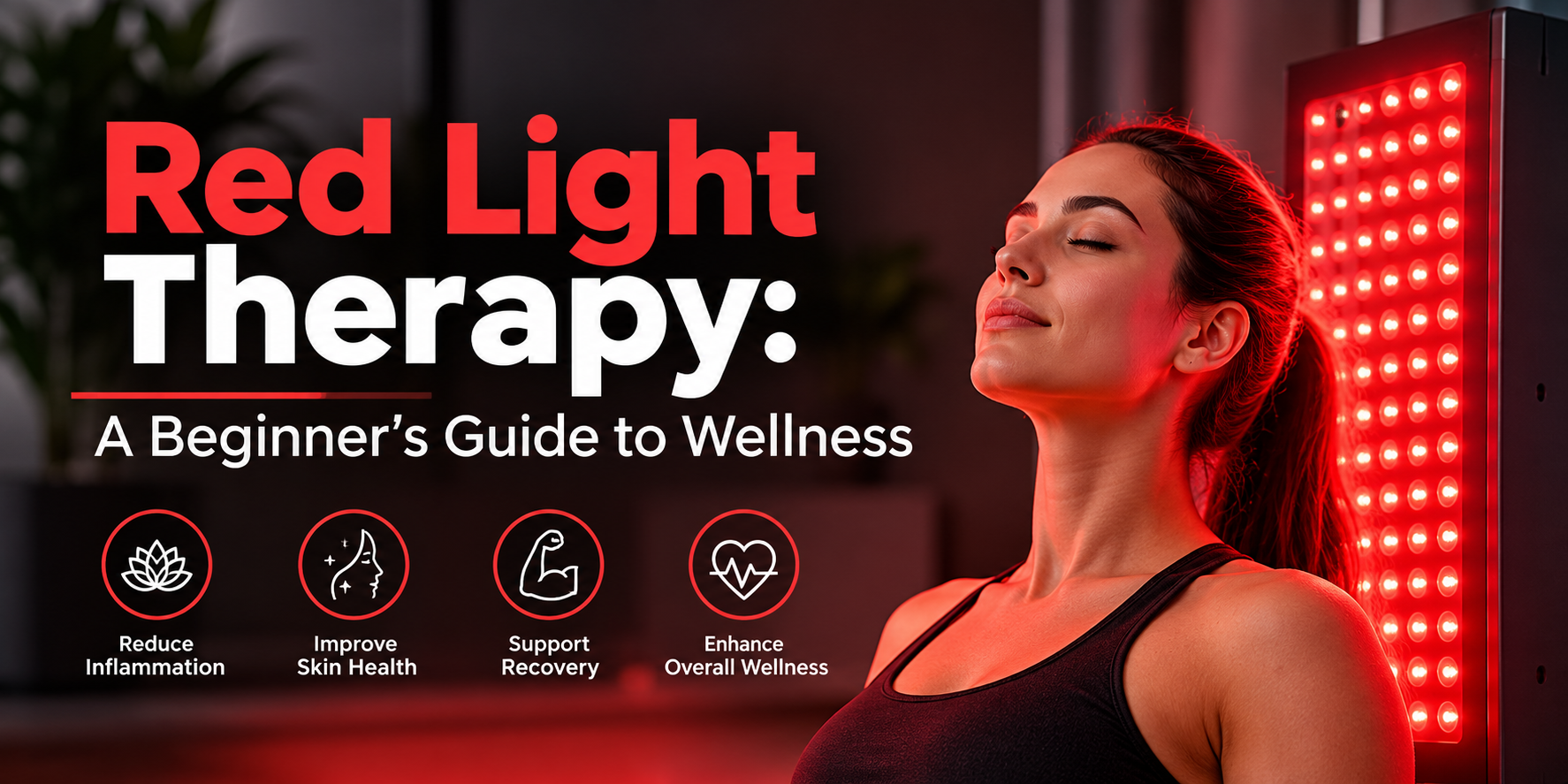
Red light therapy has moved from research labs and physiotherapy clinics into gyms, spas, recovery studios and even living rooms. It sits somewhere between promising science and wellness hype, which makes it confusing for newcomers. This guide explains what it is, what the evidence supports, and how to approach it sensibly.
What is red light therapy?
Red light therapy, also called photobiomodulation or low-level light therapy, exposes the skin and underlying tissue to low-intensity red and near-infrared light. It uses no ultraviolet rays, so it does not tan or burn the skin. It also gives off little heat, so treatment feels mild and often barely noticeable.
Two wavelength ranges are typically used:
- Red light (roughly 620 to 700 nm) penetrates the surface layers of the skin and is mainly used for skin-related goals.
- Near-infrared light (roughly 780 to 850 nm) reaches deeper, into muscle, tendon and joint tissue.
How does it work?
The leading explanation involves mitochondria, the structures in our cells that produce energy. Studies suggest that certain wavelengths of light are absorbed by an enzyme in the mitochondria called cytochrome c oxidase. This may support the cell's energy production and influence inflammation and tissue repair.
That is the working theory, and research is still refining it. The takeaway is that the effect is biological rather than a marketing gimmick, but it is also subtle. Light therapy supports your body's own processes. It is not a cure for anything.
What can it help with?
Here is where honesty matters, because the strength of evidence varies by use.
Skin health. This has some of the most consistent support. Studies have linked regular sessions to improvements in skin texture, fine lines and tone, likely through stimulation of collagen production. Results are gradual, not dramatic.
Muscle recovery and performance. Several trials suggest that using light before or after exercise may reduce muscle soreness and support recovery. This is why the technology has found a home among athletes and gym-goers. The effects are modest but reasonably consistent.
Joint and tissue discomfort. Some research points to short-term relief from stiffness and pain, particularly in conditions like knee osteoarthritis and tendon problems.
Hair growth. There is evidence that low-level light devices can help some people with pattern hair thinning, especially in early stages.
Sleep and mood. Interest is growing, but the research is thinner. Anyone promising major benefits here is getting ahead of the evidence.
You will also see claims about weight loss, detoxing and curing chronic illness. Treat those with strong scepticism.
What does a session look like?
A typical session is simple. You stand or lie in front of a panel or inside a bed, with skin exposed to the light. Most sessions last between 10 and 20 minutes, depending on the device's power output and the area being treated. Protective eyewear is usually recommended, as bright light directed at the eyes is uncomfortable and best avoided.
Consistency matters more than intensity. Most people who see benefits use treatments three to five times a week for several weeks. Occasional sessions will probably do very little.
Not all devices are equal
This is the part most beginners overlook. The market is full of products with very different quality levels.
Look at these factors:
- Wavelength accuracy. Reputable devices state their wavelengths clearly and use ones backed by research.
- Irradiance (power density). This tells you how much light energy reaches your skin. Too little means little effect. Too much can also reduce the benefit.
- Coverage. A small handheld unit treats a small area. Full-body use needs larger panels or a bed.
- Build quality and safety. Look for properly tested electronics, good heat management and clear documentation.
For commercial spaces, the choice matters even more, since equipment runs for hours daily and needs to perform consistently. Businesses considering commercial red light therapy systems should also think about proper installation, because positioning, spacing and electrical set-up all affect how well treatment works and how safe it is for clients.
Is it safe?
For most healthy adults, red light therapy is considered low risk when used correctly. Possible side effects are mild and uncommon, including temporary skin redness, dryness or eye strain if eyes are unprotected.
Speak with a doctor first if you:
- Are pregnant
- Have a history of skin cancer or are treating a suspicious skin lesion
- Take medication that makes your skin sensitive to light
- Have a medical condition affecting the eyes or skin
Also be realistic. Red light therapy should complement good habits, not replace them. Sleep, nutrition, movement and medical care do the heavy lifting.
Getting the most from your sessions
- Use clean, bare skin. Remove lotions or sunscreen first, as they can block light.
- Follow the recommended distance and time for your specific device. More is not better.
- Stay consistent. Build it into your weekly routine.
- Track your results. Note changes in recovery, skin or comfort over six to eight weeks so you can judge honestly whether it works for you.
- Keep equipment maintained. Light output can decline over time, and dust or faulty components can affect performance. Regular servicing and maintenance keeps results dependable, which is particularly important in shared environments like gyms, clinics and wellness studios.
Is it worth trying?
For many people, yes, provided expectations are sensible. Red light therapy is not a miracle treatment, but it has a reasonable evidence base for skin quality, recovery and some types of discomfort, and it is generally gentle and non-invasive. If you are curious, start with a short trial period, use quality equipment, and measure the results yourself.
If you run a gym, studio or wellness centre and are thinking of adding it to your offering, take the time to understand the technology properly. A well-planned recovery and wellness solution can add real value for members, but only when the equipment is chosen, installed and looked after correctly.
Related Blog



6b066012b5ac2.webp)
6afd7f7f38e72.png)






























6ad6096d44d50.jpg)




6ad1c7874e895.png)


6acdefb0a58d8.jpeg)

















6ab301e068635.jpg)
















6aa847276cd93.png)









6a9fa7a209e73.jpg)



6a98551d6c9c3.png)






































6a7b248dbcf8b.jpeg)










6a6350a4893cb.png)

6a606c6a4b011.jpg)










6a50e9b09fb4e.jpg)









6a2bcd56d8f33.jpg)
6a2c0d1d309d3.jpg)

6a211cc2a7dc0.png)

6a18313161c5a.jpg)
























69cb4b7827b08.webp)

























694fa33ac18ea.jpeg)



693e715695a8f.png)


693923523a9ac.png)







68ec9e22634a4.png)























68edf1fee9090.jpg)
















68f0a0f5a49dc.png)




















69dcdb1cbe702.jpg)
6aed985f6b5b8.webp)